


Odoo vs NetSuite: Choosing the Right ERP for Your Business in 2025
Choosing an Enterprise Resource Planning (ERP) system is a monumental decision for any business. It impacts everything from daily operations to long-term strategic growth. In 2025, two powerful contenders consistently emerge in discussions: Odoo vs NetSuite. Both offer extensive functionalities designed to streamline processes, but they cater to different business philosophies and operational scales. Understanding their core differences is critical for making an informed choice. As Odiware Technologies, an experienced Odoo ERP consulting firm, we guide businesses through this complex landscape. We help you identify the solution that best aligns with your unique needs and future aspirations.
Understanding the Core Offerings: Odoo vs NetSuite
Before diving into a direct comparison of Odoo vs NetSuite, let’s briefly define what each system brings to the table. Both are comprehensive ERP solutions. However, their foundational approaches differ significantly. These differences influence everything from pricing to customization capabilities.
What is Odoo?
Odoo is a suite of open-source business management software tools. It covers a vast range of business needs. This includes CRM, e-commerce, accounting, manufacturing, warehouse management, project management, and more. Odoo offers a modular structure. You can start with a few applications and add more as your business grows. This flexibility makes it highly appealing for many companies. It’s known for its user-friendly interface and strong community support. Odoo provides both a community edition (free) and an enterprise edition (paid, with more features and support). This dual model offers significant flexibility for businesses of all sizes.
What is NetSuite?
NetSuite, now an Oracle company, is a cloud-based business management software suite. It integrates ERP, CRM, and e-commerce functionalities into a single platform. NetSuite is designed primarily for larger, more complex organizations. It offers robust financial management, global business management, and robust supply chain capabilities. NetSuite operates purely as a Software-as-a-Service (SaaS) model. This means all infrastructure and maintenance are handled by Oracle. Businesses benefit from automatic updates and high availability. It’s a powerful tool for companies with extensive global operations and intricate reporting requirements.
Key Differentiators: Odoo vs NetSuite
When evaluating Odoo vs NetSuite, several key areas stand out. These distinctions often dictate which system is a better fit for a particular organization. Let’s explore these critical differences in detail. We will consider aspects like architecture, cost, scalability, and user experience. Understanding these points is vital for your decision-making process. It helps you assess which platform truly aligns with your operational strategy.
1. Architecture and Flexibility
Odoo’s open-source architecture provides unparalleled flexibility. Businesses can customize nearly every aspect of the system. This includes modifying existing modules or developing entirely new ones. This level of control is a significant advantage for companies with unique workflows. It also allows for deeper integration with existing proprietary systems. However, this flexibility requires technical expertise for implementation and ongoing maintenance. You might need an Odoo consultant for complex customizations. This ensures the system evolves with your business without breaking core functionalities.
NetSuite, as a proprietary SaaS solution, offers a more standardized approach. Customizations are possible, but they are typically within a defined framework. These customizations often involve scripting or configuration rather than core code modifications. This ensures system stability and easier upgrades. However, it can limit the extent to which the system can adapt to highly specialized business processes. For many businesses, the out-of-the-box functionality is more than sufficient. Still, highly niche industries might find these limitations restrictive. The choice between Odoo vs NetSuite in this area often comes down to your need for deep customization versus standardized stability.
2. Cost Model and Total Cost of Ownership (TCO)
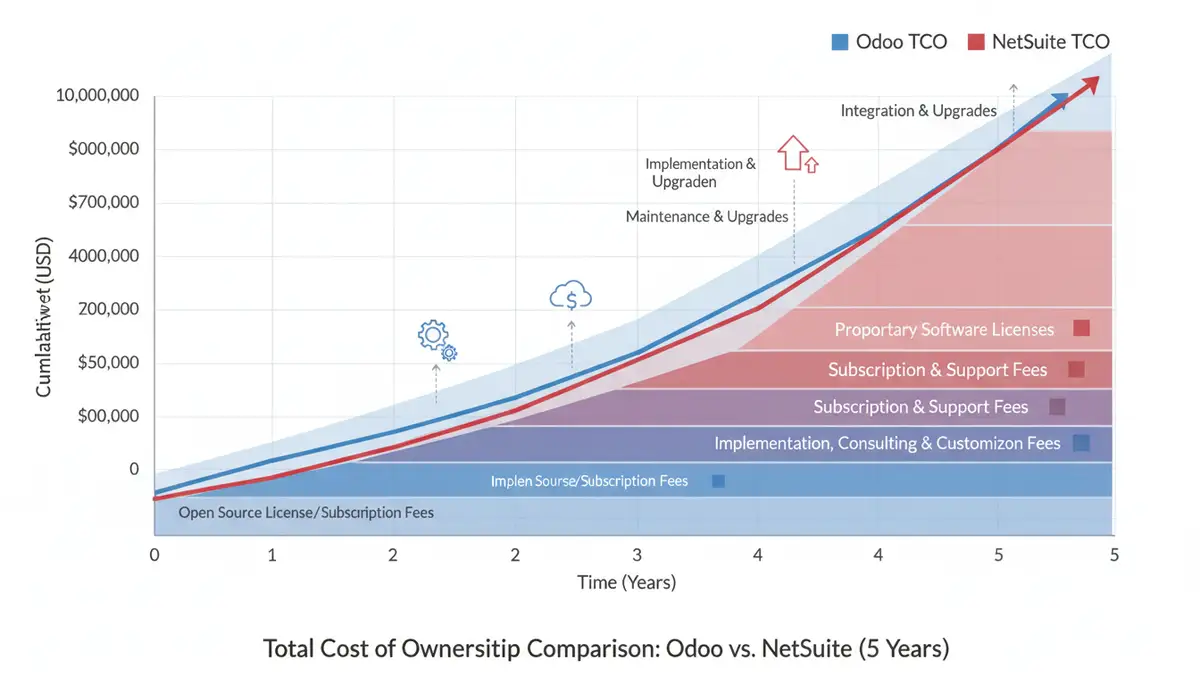
The cost structure is a major point of divergence when comparing Odoo vs NetSuite. Odoo offers a Community Edition that is free to use. The Enterprise Edition comes with a per-user, per-app subscription model. This allows businesses to pay only for the modules they need. Implementation costs vary greatly. They depend on the complexity of customization and integration. Hosting can be on-premise or cloud-based, offering more control over infrastructure costs. Overall, Odoo is often considered more cost-effective, especially for small and medium-sized businesses. A detailed comparison of NetSuite vs Odoo pricing is available from Odoo itself. This resource highlights various aspects, including hosting propositions and feature availability.
NetSuite follows a subscription-based model. Its pricing is generally higher, reflecting its comprehensive, all-in-one cloud platform. The subscription typically includes licensing, hosting, and maintenance. Customization and implementation services are additional costs. While the upfront software cost might seem higher, the SaaS model eliminates infrastructure management expenses. This can simplify IT budgeting. However, for businesses on a tighter budget, the initial investment for NetSuite can be substantial. When considering Odoo vs NetSuite, it’s crucial to look beyond just licensing fees. Evaluate the total cost of ownership (TCO) over several years. This includes implementation, training, support, and potential customization costs.
3. Scalability and Global Reach
NetSuite is famously built for growth and global operations. It offers robust multi-company, multi-currency, and multi-language capabilities out-of-the-box. This makes it a strong contender for large enterprises with international footprints. Its architecture supports high transaction volumes and complex organizational structures. Companies expanding rapidly across different regions often find NetSuite’s global features invaluable. It provides a unified view of global operations, simplifying consolidation and compliance. This focus on enterprise-level scalability is a core strength of NetSuite.
Odoo is also highly scalable, but its approach differs. It scales through its modular design and the ability to add more resources (servers, databases) as needed. For smaller companies, Odoo can start very lean. It then grows by adding modules and users. While Odoo supports multi-company and multi-currency operations, implementing these features for complex global scenarios might require more configuration or custom development. For a deeper dive into scalability, resources like Gurussolutions.com provide insights into how NetSuite is built for growth. They also explain how Odoo suits smaller companies better. Odiware Technologies helps businesses scale their Odoo instances effectively. We ensure the system grows seamlessly with your evolving requirements. The choice of Odoo vs NetSuite often depends on your current scale and your projected global expansion trajectory.
4. Implementation and Customization
Implementing an ERP system is a significant undertaking. Odoo’s implementation can be quicker for basic setups due to its modularity. However, extensive customization can extend the timeline. Odoo projects often involve a mix of configuration and custom development. This requires skilled developers and business analysts. Odiware Technologies specializes in Odoo ERP implementation. We ensure a smooth transition and tailor the system to your exact specifications. We understand the nuances of integrating Odoo with existing systems. This makes your digital transformation journey efficient and effective.
NetSuite implementations are typically more structured and often longer. This is due to its comprehensive nature and the need to configure a vast array of features. While less custom coding is involved, the configuration phase is extensive. It requires a deep understanding of NetSuite’s capabilities. Companies like odooimplementers.com, ksolves.com, and cybrosys.com also offer ERP implementation services. However, our focus at Odiware is on leveraging Odoo’s open-source power. We deliver highly customized, cost-effective solutions. The complexity of your business processes will greatly influence the implementation path. This is a key consideration when comparing Odoo vs NetSuite.
5. User Experience and Interface
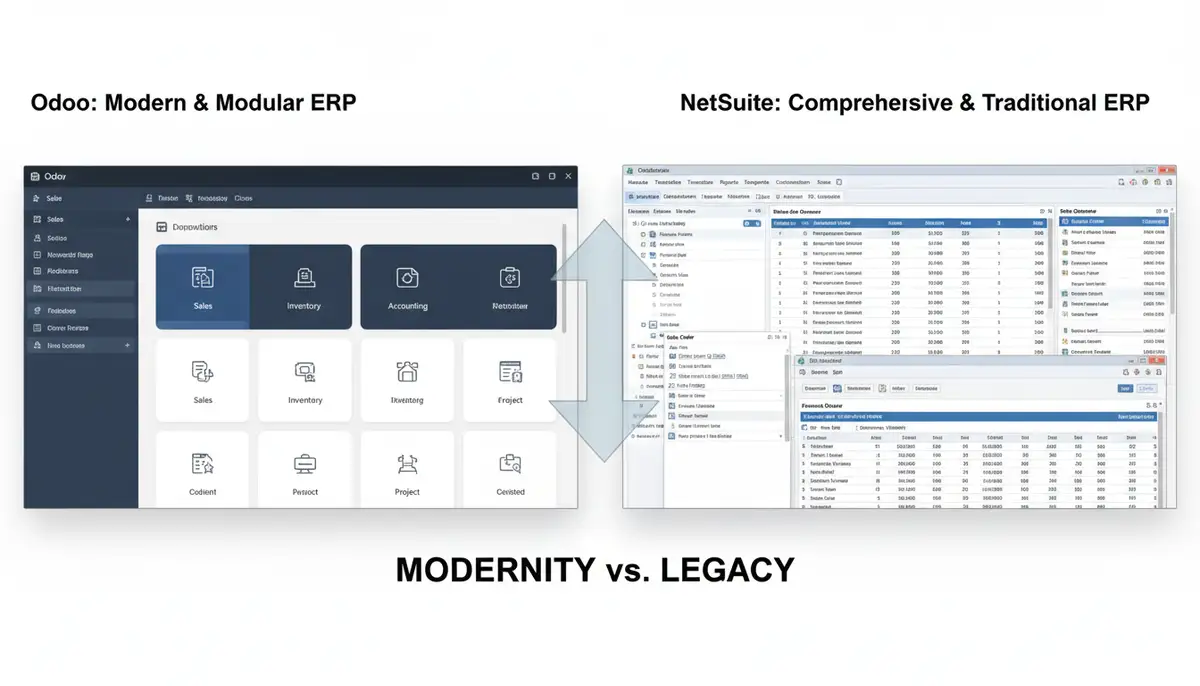
Odoo is widely praised for its modern, intuitive, and user-friendly interface. It resembles popular web applications, making it easier for new users to adopt. The design emphasizes simplicity and efficiency. This reduces training time and increases user acceptance. Its modularity means users only see the applications relevant to their roles. This prevents information overload. The consistent design across all modules also contributes to a seamless user experience. This focus on usability is a major selling point for Odoo. It ensures your team can quickly become proficient.
NetSuite’s interface is robust and highly functional. It offers extensive dashboards and reporting capabilities. While powerful, some users might find it less intuitive than Odoo’s more modern design. It can have a steeper learning curve for new users. However, once mastered, it provides deep insights and control. Its strength lies in its comprehensive data presentation and analytical tools. The choice between Odoo vs NetSuite here often depends on your team’s technical proficiency and preference for modern aesthetics versus deep functionality. Both systems aim to provide a productive environment. However, their approaches to achieving this differ.
6. Modules and Functionality
Both Odoo and NetSuite offer a broad spectrum of modules. These cover nearly every aspect of business operations. However, their strengths in specific areas can vary. Odoo excels in its integrated approach across many domains. From manufacturing (MRP) to project management and HR, its modules are designed to work together seamlessly. The benefits of Odoo extend to its comprehensive suite. This makes it a powerful contender for businesses seeking a unified platform. Odoo’s app store also provides thousands of community-contributed modules. These can extend functionality even further.
NetSuite provides strong core ERP functionalities, especially in financial management, global accounting, and supply chain. Its CRM and e-commerce modules are also very capable. For businesses with complex financial reporting or multi-subsidiary operations, NetSuite often offers out-of-the-box solutions that are highly robust. A detailed comparison of NetSuite vs Odoo highlights that Odoo can be a more budget-friendly option. This is especially true for small and medium-sized businesses. It allows you to start with single apps for free. This makes it perfect for initial trials. The decision on Odoo vs NetSuite in terms of modules hinges on your specific industry needs. It also depends on the depth of functionality required in each area.
When to Choose Odoo
Odoo is often the ideal choice for several types of businesses. It particularly shines for Small to Medium-sized Enterprises (SMEs) and growing companies. If your business values flexibility and wants control over its software, Odoo is a strong candidate. Companies with unique operational workflows that require significant customization will benefit. The open-source nature allows for deep tailoring. Businesses looking for a cost-effective solution with a clear path to scalability also find Odoo appealing. Furthermore, if you prefer a modern, intuitive user interface, Odoo generally wins. Manufacturing companies, retail businesses, and service providers often find Odoo’s integrated modules perfectly suited to their needs. Odiware Technologies frequently assists such businesses. We help them leverage Odoo’s power to streamline their operations and achieve growth.
When to Choose NetSuite
NetSuite is typically the preferred choice for larger, more complex enterprises. Especially those with extensive global operations. If your business requires robust, out-of-the-box multi-company, multi-currency, and multi-language support, NetSuite excels. It is also well-suited for companies in highly regulated industries. These industries often demand stringent compliance and extensive financial reporting capabilities. Businesses that prefer a fully managed SaaS solution, without the burden of infrastructure management, will find NetSuite attractive. Companies undergoing rapid global expansion often turn to NetSuite. Its comprehensive suite is designed to handle intricate global business processes. While Odoo vs NetSuite comparison often focuses on cost, NetSuite’s enterprise-grade features justify its higher price point for specific use cases.
Common Pitfalls and Best Practices in ERP Selection
Regardless of whether you lean towards Odoo vs NetSuite, the ERP selection and implementation journey is fraught with potential pitfalls. Avoiding these common mistakes is crucial for a successful outcome. We have seen many businesses stumble by not preparing adequately. Our experience at Odiware Technologies highlights the importance of strategic planning. It also emphasizes engaging expert guidance from the outset.
Common Mistakes to Avoid
- Underestimating Customization Needs: Many businesses assume out-of-the-box functionality will suffice. They later realize their unique processes demand significant tailoring. This leads to scope creep and budget overruns.
- Ignoring Total Cost of Ownership (TCO): Focusing solely on licensing fees overlooks hidden costs. These include implementation, training, integration, and ongoing maintenance. This is particularly relevant in the Odoo vs NetSuite debate.
- Lack of Proper Planning and Strategy: Rushing into an ERP decision without a clear understanding of current processes and future goals is a recipe for disaster. A detailed requirements analysis is essential.
- Insufficient User Training and Adoption: Even the best ERP system fails if users don’t embrace it. Poor training leads to low adoption rates and resistance to change.
- Neglecting Data Migration Strategy: Improper data migration can lead to corrupted data, operational disruptions, and a loss of historical insights. Planning for backup Odoo strategies is also crucial.
- Not Involving Key Stakeholders: Failing to involve end-users and departmental heads early on can lead to a system that doesn’t meet their practical needs.
Best Practices for a Successful ERP Implementation
- Define Clear Business Requirements: Document your current processes, pain points, and desired future state. This clarity guides the selection of Odoo vs NetSuite and subsequent customization.
- Conduct a Thorough Vendor Evaluation: Look beyond features. Assess vendor experience, support, and cultural fit. This is where an Odoo consultant like Odiware adds immense value.
- Prioritize Phased Implementation: Instead of a ‘big bang’ approach, consider implementing modules in phases. This allows for easier adaptation and reduces risk.
- Invest in Comprehensive Training: Develop a robust training program for all users. Ensure ongoing support to maximize user adoption and system utilization.
- Establish a Strong Project Management Team: Designate internal champions and ensure clear communication channels. This team will drive the project forward.
- Plan for Change Management: Prepare your organization for the transition. Communicate benefits, address concerns, and foster a positive attitude towards the new system.
When to Involve an Odoo Consultant
The decision between Odoo vs NetSuite is complex. It involves numerous technical and business considerations. Engaging an experienced Odoo consultant, especially from a firm like Odiware Technologies, can significantly de-risk your project. We bring deep product knowledge and real-world implementation experience. Our consultants help you clarify your requirements, map them to Odoo’s capabilities, and design a scalable architecture. We also manage the implementation process. This includes customization, data migration, and user training. Our goal is to ensure your Odoo system is perfectly aligned with your business objectives. We help you avoid common pitfalls and achieve a high return on investment. While Odoo is user-friendly, its full potential is unlocked with expert guidance. This is particularly true for complex integrations or unique business models. Don’t navigate the intricacies of ERP implementation alone. Partner with experts who understand the platform inside out.
Odoo vs NetSuite: A Feature Comparison Table
To further illustrate the differences between Odoo vs NetSuite, here’s a concise comparison of key features and aspects. This table provides a quick reference point for decision-makers. It highlights where each system typically excels.

| Feature/Aspect | Odoo | NetSuite |
|---|---|---|
| Architecture | Open-source, modular | Proprietary SaaS, unified platform |
| Cost Model | Freemium (Community), per-user/per-app (Enterprise) | Subscription-based, higher upfront cost |
| Customization | Highly flexible, deep code modification possible | Configurable, scripting within framework |
| Scalability | Scales with modularity, resource addition | Built for global, high-volume enterprise operations |
| User Interface | Modern, intuitive, user-friendly | Robust, functional, steeper learning curve |
| Hosting Options | On-premise, cloud (Odoo.sh, third-party) | Cloud-only (Oracle managed) |
| Target Market | SMEs, growing businesses, unique workflows | Large enterprises, global operations, complex financials |
| Community Support | Strong, active community | Vendor-driven support, partner network |
Real-World Impact: Choosing Odoo vs NetSuite for Growth
Consider a mid-sized manufacturing company, ‘InnovateTech,’ looking to integrate its production, sales, and accounting. They explored both Odoo vs NetSuite. InnovateTech had highly specific manufacturing processes. They also needed tight integration with proprietary machinery. Odoo’s open-source nature allowed Odiware Technologies to develop custom modules. These modules precisely matched their unique production lines. This led to a 20% increase in production efficiency. The modular pricing also meant they could start with essential apps. They then added more as their needs evolved. This approach offered significant cost savings compared to NetSuite’s more rigid structure. The ability to tailor Odoo to their exact needs was the deciding factor. It proved more beneficial than a standardized, albeit comprehensive, solution.
Conversely, ‘GlobalConnect Inc.,’ a rapidly expanding e-commerce giant with operations in 15 countries, chose NetSuite. Their primary drivers were robust multi-currency financial consolidation and seamless global inventory management. NetSuite’s out-of-the-box capabilities for international taxation and compliance were critical. While Odoo could be configured for these needs, NetSuite offered a more immediate, enterprise-grade solution. This reduced their time to market in new regions. The higher investment was justified by the speed and reliability of global operations. For GlobalConnect, the comprehensive, unified platform of NetSuite was paramount. It streamlined their complex international logistics. This illustrates how the choice between Odoo vs NetSuite is deeply contextual.
Frequently Asked Questions About Odoo vs NetSuite
1. Is Odoo cheaper than NetSuite?
Generally, yes, Odoo is often more cost-effective. Especially for small and medium-sized businesses. Its freemium model (Community Edition) and modular pricing (Enterprise Edition) allow for lower initial investment. NetSuite, being a comprehensive SaaS solution, typically has higher subscription fees. However, always consider the Total Cost of Ownership (TCO). This includes implementation, customization, and ongoing support costs. Odiware helps clients understand the full financial picture for their specific Odoo implementation.
2. Which system is easier to implement?
Odoo can have a faster implementation for basic setups due to its modularity. However, complex customizations can extend the timeline. NetSuite implementations are often more structured and can be longer due to its vast feature set. The ease of implementation largely depends on your specific business requirements and the level of customization needed. Engaging an expert Odoo consultant like Odiware ensures a smoother process for Odoo.
3. Can Odoo handle large enterprises like NetSuite?
Yes, Odoo can handle large enterprises. It scales effectively through its modular design and robust architecture. However, for extremely complex global operations, multi-subsidiary management, and intricate financial consolidation, NetSuite often provides more out-of-the-box features. Odoo can achieve similar results with proper configuration and custom development, which is where Odiware’s expertise becomes invaluable. The choice between Odoo vs NetSuite for large enterprises depends on the emphasis on customization versus standardized functionality.
4. What about community support for Odoo vs NetSuite?
Odoo benefits from a very active and vibrant open-source community. This provides extensive documentation, forums, and community-contributed modules. NetSuite offers strong vendor-driven support from Oracle and a network of certified partners. Both provide robust support, but through different models. The Odoo community can be a great resource for troubleshooting and finding solutions. However, for mission-critical systems, professional support from an Odoo partner like Odiware is highly recommended.
Conclusion: Your Strategic ERP Partner in the Odoo vs NetSuite Decision

The debate of Odoo vs NetSuite is not about which system is inherently ‘better.’ It’s about which system is ‘better for your business.’ Both platforms are powerful, offering distinct advantages for different organizational needs. Odoo shines with its flexibility, cost-effectiveness, and open-source nature. It empowers businesses to tailor their ERP experience. NetSuite stands out with its comprehensive, enterprise-grade, cloud-first approach. It is ideal for large, complex, and globally expanding operations. Making the right choice requires a deep understanding of your current processes, future goals, and budget constraints. It’s a strategic decision that will shape your business for years to come.
As you navigate this critical decision, remember that expert guidance is invaluable. Odiware Technologies specializes in Odoo ERP implementation and custom software solutions. We help businesses like yours streamline operations and enhance productivity. We don’t just implement software; we partner with you to achieve your strategic objectives. Our team brings extensive experience in helping companies leverage Odoo’s full potential. We ensure your investment delivers maximum value. If you’re weighing your options for Odoo vs NetSuite, or are ready to explore how Odoo can transform your business, we encourage you to reach out. Contact us today for a consultation. Let us help you make an informed decision and embark on a successful digital transformation journey.


