


Unlocking Financial Clarity with Accounting in Odoo
In today’s fast-paced business world, effective financial management is not just an advantage; it’s a necessity. Companies need robust tools to track every transaction, manage budgets, and ensure compliance. This is where a powerful ERP system like Odoo comes into play. Specifically, mastering accounting in Odoo can transform your financial operations. It moves you from reactive bookkeeping to proactive financial strategy. For businesses aiming for growth and sustained profitability, understanding the depth of Odoo’s accounting capabilities is crucial.
Many organizations struggle with fragmented financial data and manual processes. These issues lead to errors, delays, and a lack of real-time insights. Odoo offers a unified solution, bringing all your financial data into one place. This integration provides a comprehensive view of your company’s economic health. As experienced Odoo consultants at Odiware Technologies, we have seen firsthand how proper implementation of accounting in Odoo empowers businesses. It helps them make smarter decisions and achieve greater financial control.
The Core Architecture of Accounting in Odoo
Odoo’s accounting module is more than just a ledger. It is a fully integrated suite designed to handle all aspects of financial management. It covers everything from general ledger and accounts payable to accounts receivable and asset management. The system’s architecture emphasizes automation and real-time data. This design reduces manual effort and improves accuracy. Understanding this core architecture is key to leveraging the full power of accounting in Odoo.
Key Modules and Their Functions
- General Ledger: The backbone of your financial records, tracking all transactions.
- Accounts Receivable (AR): Manages customer invoices, payments, and credit.
- Accounts Payable (AP): Handles vendor bills, expenses, and payments.
- Bank Reconciliation: Automates matching bank statements with ledger entries.
- Asset Management: Tracks fixed assets, depreciation, and disposal.
- Budgeting: Helps create, manage, and monitor financial budgets.
- Tax Management: Configures and calculates various taxes, ensuring compliance.
Each of these modules works together seamlessly. This integration ensures that every financial event, from a sales order to a vendor bill, is automatically recorded. Odoo automatically creates all the behind-the-scenes journal entries for each of your accounting transactions. This includes customer invoices, point of sale orders, and expenses, as detailed in Odoo’s documentation on main accounting concepts. This automation is a cornerstone of efficient accounting in Odoo.
The Power of Integration: Beyond Basic Bookkeeping
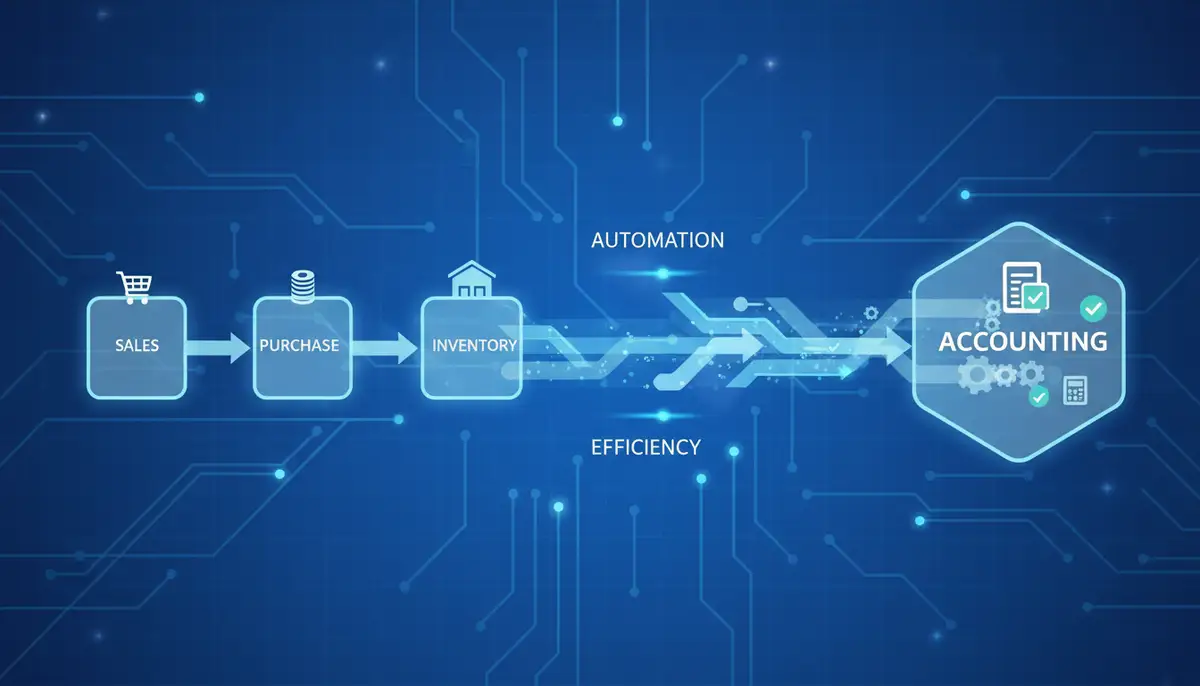
The true strength of accounting in Odoo lies in its native integration with other Odoo applications. Imagine a sales order automatically generating an invoice, which then updates your accounts receivable and inventory. This is not just a dream; it’s standard functionality within Odoo. This level of integration eliminates data silos. It also provides a single source of truth for all your business operations. This holistic approach makes Odoo unique among ERP solutions.

Real-time Financial Reporting and Analytics
One of the most significant benefits of accounting in Odoo is its ability to generate real-time financial reports. You can access balance sheets, profit and loss statements, cash flow analyses, and more, all updated instantaneously. This means decision-makers always have the most current information. They can react quickly to market changes or internal performance shifts. This capability is vital for strategic planning and operational adjustments in 2025.
- Customizable Dashboards: Tailor your financial dashboards to display the most critical KPIs for your business.
- Drill-down Capabilities: Easily click into reports to view underlying transactions and details.
- Multi-company & Multi-currency: Manage finances for multiple entities and currencies within a single Odoo instance.
- Budget vs. Actual Analysis: Compare your financial performance against set budgets.
- Audit Trails: Maintain a clear record of all financial transactions and changes for compliance and security.
This robust reporting framework ensures complete transparency. It also supports informed decision-making across all levels of your organization. For a deeper dive into Odoo’s comprehensive accounting features, you can explore the official Odoo documentation on accounting applications.
Best Practices for Implementing Accounting in Odoo
Implementing accounting in Odoo successfully requires careful planning and execution. It’s not just about installing software; it’s about aligning technology with your business processes. As Odoo ERP consulting specialists at Odiware Technologies, we guide clients through this critical phase. We ensure a smooth transition and optimal configuration. Our focus is always on maximizing the business impact of your Odoo investment.
Strategic Planning and Configuration
- Chart of Accounts (CoA) Design: Develop a CoA that accurately reflects your business structure and reporting needs. This is foundational for effective accounting in Odoo.
- Tax Configuration: Accurately set up tax rates, rules, and reporting requirements for various jurisdictions.
- Fiscal Year and Period Settings: Define your financial calendar to align with your business cycles.
- Journal Configuration: Customize journals for different transaction types (sales, purchases, bank, etc.) for better organization.
- User Roles and Permissions: Assign appropriate access levels to ensure data security and compliance.
These initial steps are crucial. They lay the groundwork for accurate financial data and efficient workflows. Skipping any of these can lead to significant headaches down the line. Both accrual and cash basis accounting are supported in Odoo, allowing you to report income and expense based on when the transaction occurs or when cash changes hands. You can read more about these capabilities in Odoo’s official accounting documentation.
Data Migration and Training

Migrating historical financial data is a delicate process. It requires precision and validation. Our consultants ensure data integrity during this phase. Equally important is comprehensive user training. Your team needs to understand how to use accounting in Odoo effectively. Proper training boosts adoption and minimizes errors. It also ensures your team can leverage the system’s full potential.
Common Mistakes to Avoid When Using Accounting in Odoo
Even with the best intentions, businesses can encounter pitfalls during or after Odoo implementation. Recognizing these common mistakes can save you time and resources. Our experience at Odiware Technologies highlights several areas where companies often stumble when managing accounting in Odoo.
- Underestimating Configuration Complexity: Treating Odoo as a plug-and-play solution ignores its powerful customization capabilities. Proper setup is critical.
- Inadequate Data Validation: Migrating dirty data leads to inaccurate reports and distrust in the system.
- Skipping User Training: Users who don’t understand the system will make errors, negating automation benefits.
- Neglecting Regular Reconciliation: Failing to reconcile bank statements and other accounts can lead to discrepancies and compliance issues.
- Ignoring Internal Controls: Proper segregation of duties and approval workflows are essential for security and fraud prevention.
- Not Planning for Scalability: Your accounting setup should anticipate future growth and evolving business needs.
Avoiding these common errors requires a proactive approach. It often involves expert guidance. A well-implemented accounting in Odoo system provides immense benefits of Odoo for modern enterprises. It helps streamline operations and enhance productivity across the board.
When to Involve an Odoo Consultant for Accounting in Odoo
While Odoo is user-friendly, its accounting module offers deep functionality. Many businesses find immense value in partnering with an experienced Odoo consultant. This is especially true when dealing with complex financial scenarios or aiming for peak efficiency. Odiware Technologies specializes in Odoo ERP implementation and custom software solutions. We help businesses streamline operations and enhance productivity. Our expertise ensures you get the most out of accounting in Odoo.
Scenarios Where Expert Guidance is Invaluable
| Scenario | Why a Consultant Helps |
|---|---|
| Complex Chart of Accounts | Designing an optimal CoA for multi-company or specific industry needs. |
| Multi-currency & Multi-company Setup | Configuring intricate intercompany transactions and currency revaluations. |
| Tax Compliance in Multiple Regions | Ensuring accurate tax setup and reporting across different jurisdictions. |
| Integration with External Systems | Connecting Odoo accounting with third-party payroll, banking, or e-commerce platforms. |
| Performance Optimization | Troubleshooting performance issues or optimizing large datasets for faster reporting. |
| Custom Reporting Needs | Developing bespoke financial reports beyond Odoo’s standard offerings. |
An Odoo consultant brings specialized knowledge and best practices. They can navigate complex configurations and customize the system to your unique requirements. This partnership ensures your accounting in Odoo setup is robust, compliant, and optimized for your business goals. Companies like odooimplementers.com, cybrosys.com, and serpentcs.com also offer Odoo implementation services. However, Odiware Technologies focuses on delivering tailored solutions that truly fit your operational needs and strategic objectives.
Advanced Features and Future-Proofing Your Accounting in Odoo
Odoo is continuously evolving, with new features and improvements released regularly. Staying updated with these advancements is key to future-proofing your financial operations. The platform offers advanced capabilities that can further enhance your accounting in Odoo setup. These features provide even greater control and automation.
Beyond the Basics: Leveraging Advanced Functionality
- Analytic Accounting: Gain deeper insights into profitability by tracking costs and revenues across projects, departments, or cost centers.
- Deferred Revenue/Expense: Automate the recognition of revenue and expenses over time, improving accuracy for subscriptions or long-term contracts.
- Intercompany Transactions: Simplify financial management for groups of companies with automated intercompany invoicing and reconciliation.
- Budgetary Control: Implement strict budgetary controls with alerts and approval workflows to prevent overspending.
- Electronic Bank Integration: Directly connect with your bank for automated statement imports and payment processing.
These advanced features transform accounting in Odoo from a transactional system into a strategic financial planning tool. They enable businesses to achieve higher levels of efficiency and insight. Remember, regularly backing up your Odoo data is also critical for long-term security and continuity. For comprehensive strategies, refer to our guide on mastering your Odoo data: backup Odoo strategies.
For a visual guide on setting up some of these crucial configurations, you might find this video helpful:
. It provides an excellent overview of the initial setup process within Odoo’s accounting module.
FAQs About Accounting in Odoo
- Q: Is Odoo accounting suitable for small businesses? A: Absolutely. Odoo’s modular design means it scales well. Small businesses can start with essential accounting features and add more as they grow. Its user-friendly interface makes it accessible for various business sizes.
- Q: How does Odoo handle multi-currency transactions? A: Odoo has robust multi-currency support. It allows you to manage transactions in different currencies, automatically handles exchange rate differences, and provides accurate reporting in your base currency. This is a significant advantage for international operations.
- Q: Can Odoo integrate with my existing payroll system? A: Yes, Odoo’s open architecture allows for integration with various third-party payroll systems through APIs or custom connectors. This ensures a seamless flow of data between your accounting and payroll functions.
- Q: What kind of support is available for accounting in Odoo? A: Odoo offers extensive official documentation and a large community forum. Additionally, Odoo partners like Odiware Technologies provide specialized support, implementation services, and custom development to meet specific business needs.
- Q: Is Odoo compliant with international accounting standards? A: Odoo is designed to be highly configurable to meet various local and international accounting standards, including IFRS and GAAP. Proper configuration by an experienced consultant ensures compliance in your specific region.
Conclusion: Elevating Your Financial Operations with Odoo
The journey to financial excellence is continuous. Implementing and optimizing accounting in Odoo represents a significant step forward for any business. It offers unparalleled integration, real-time insights, and automation capabilities. These features empower you to make smarter, faster, and more informed financial decisions. It moves your business beyond traditional accounting limitations.

At Odiware Technologies, we understand the intricacies of Odoo’s financial modules. We combine this technical expertise with a deep understanding of business processes. Our goal is to help you unlock the full potential of accounting in Odoo. We ensure your financial system supports your strategic objectives. Whether you are just starting your Odoo journey or looking to optimize an existing setup, expert guidance can make all the difference.
Don’t let complex financial management hold your business back. Partner with Odiware Technologies to transform your accounting in Odoo into a powerful asset. We help you achieve greater efficiency, accuracy, and strategic insight. Ready to elevate your financial operations? Contact us today to discuss your Odoo accounting needs and discover how we can help.


