For many years, Microsoft Excel has been a trusted business tool for managing data, tracking finances, monitoring inventory, and creating reports. Its flexibility and ease of use have made it a popular choice among startups, small businesses, and even large organizations.
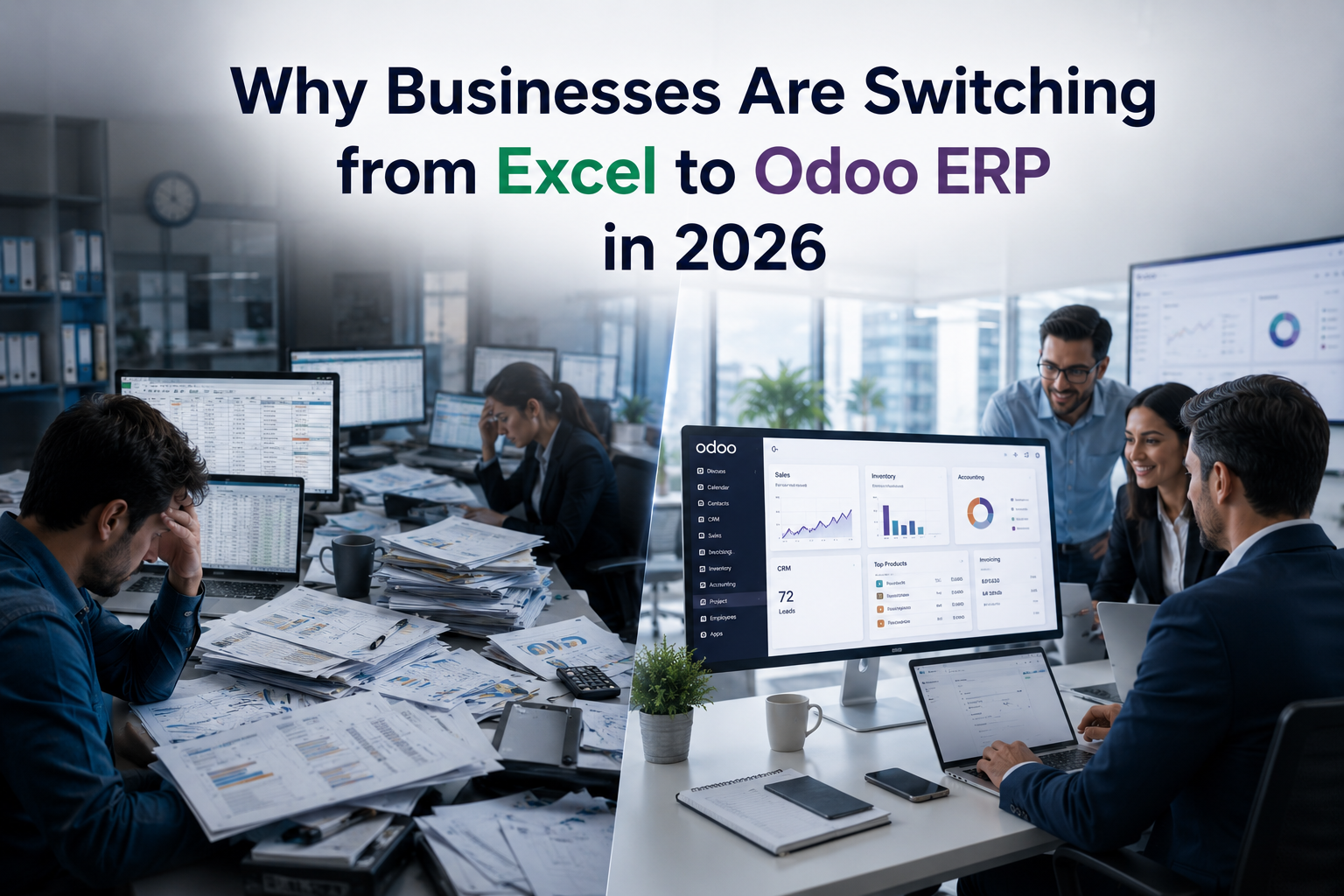
For many years, Microsoft Excel has been a trusted business tool for managing data, tracking finances, monitoring inventory, and creating reports. Its flexibility and ease of use have made it a popular choice among startups, small businesses, and even large organizations.
However, as businesses grow, managing operations through spreadsheets becomes increasingly challenging. Multiple files, manual data entry, reporting delays, and data inconsistencies can slow down operations and impact decision-making. In 2026, businesses are facing higher customer expectations, more complex supply chains, and increasing demands for real-time information. As a result, many organizations are moving beyond spreadsheets and adopting integrated enterprise resource planning solutions such as Odoo ERP.
Odoo ERP provides a centralized platform that connects departments, automates processes, and delivers real-time visibility across the entire organization. This article explores why businesses are making the transition from Excel to Odoo ERP and how this shift is helping organizations improve efficiency, scalability, and long-term growth.
Businesses looking to move beyond spreadsheets often start with a structured Odoo ERP Implementation strategy to unify operations and improve efficiency.
The Growing Challenges of Managing Business Operations in Excel
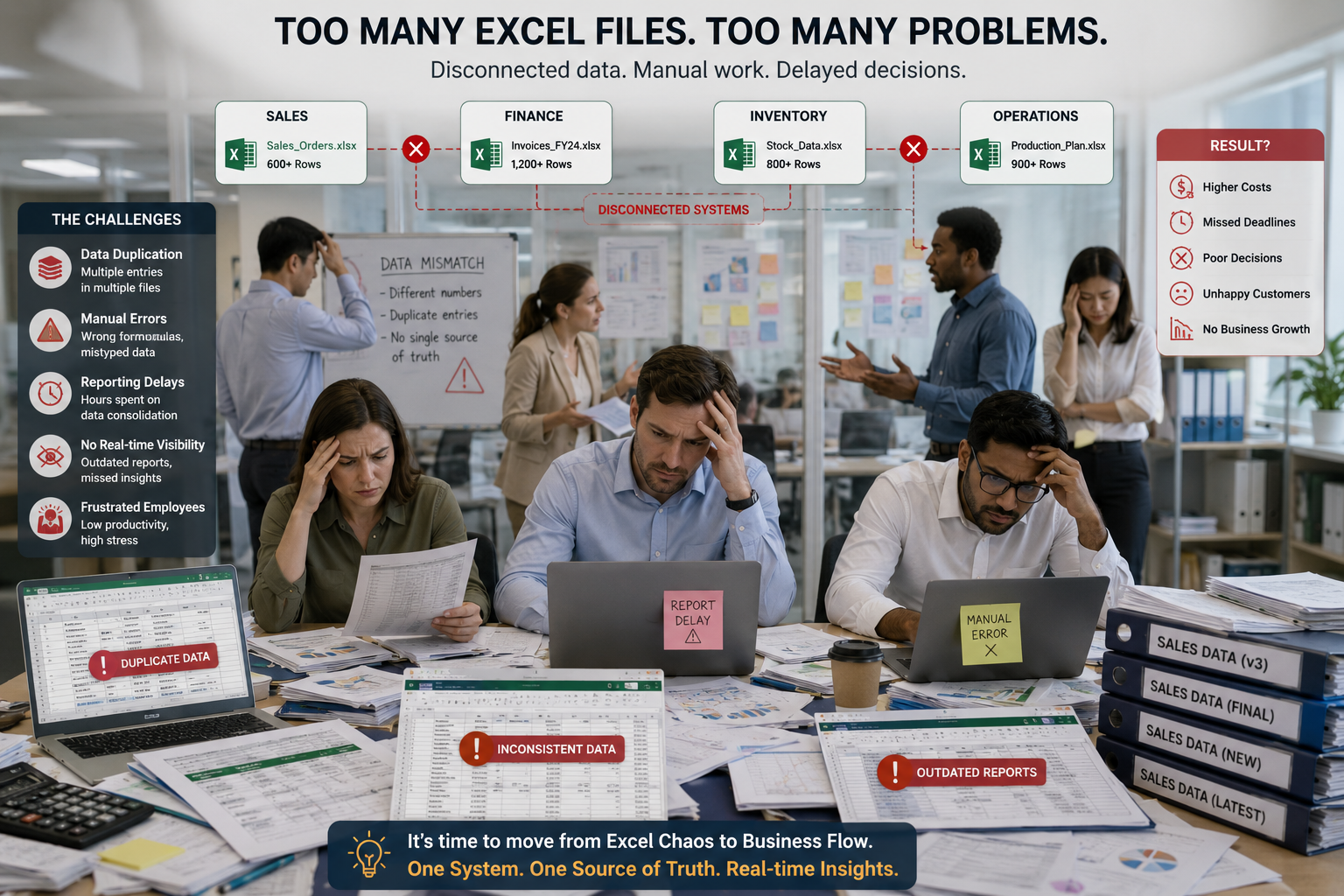
Excel remains an excellent tool for calculations, data analysis, and reporting. However, it was not designed to manage end-to-end business operations.
As organizations expand, they often rely on multiple spreadsheets across departments. Sales teams maintain customer records, finance teams manage accounting sheets, inventory teams track stock levels, and procurement teams maintain supplier information. Over time, these disconnected systems create operational inefficiencies.
Common challenges associated with spreadsheet-based management include duplicate data entry, reporting delays, version control issues, manual errors, limited collaboration, and the inability to access real-time business information. When multiple employees work on different versions of the same file, maintaining data accuracy becomes increasingly difficult.
These challenges often become major obstacles to growth, prompting businesses to seek more advanced solutions.
Why Businesses Are Choosing Odoo ERP in 2026
Centralized Business Operations
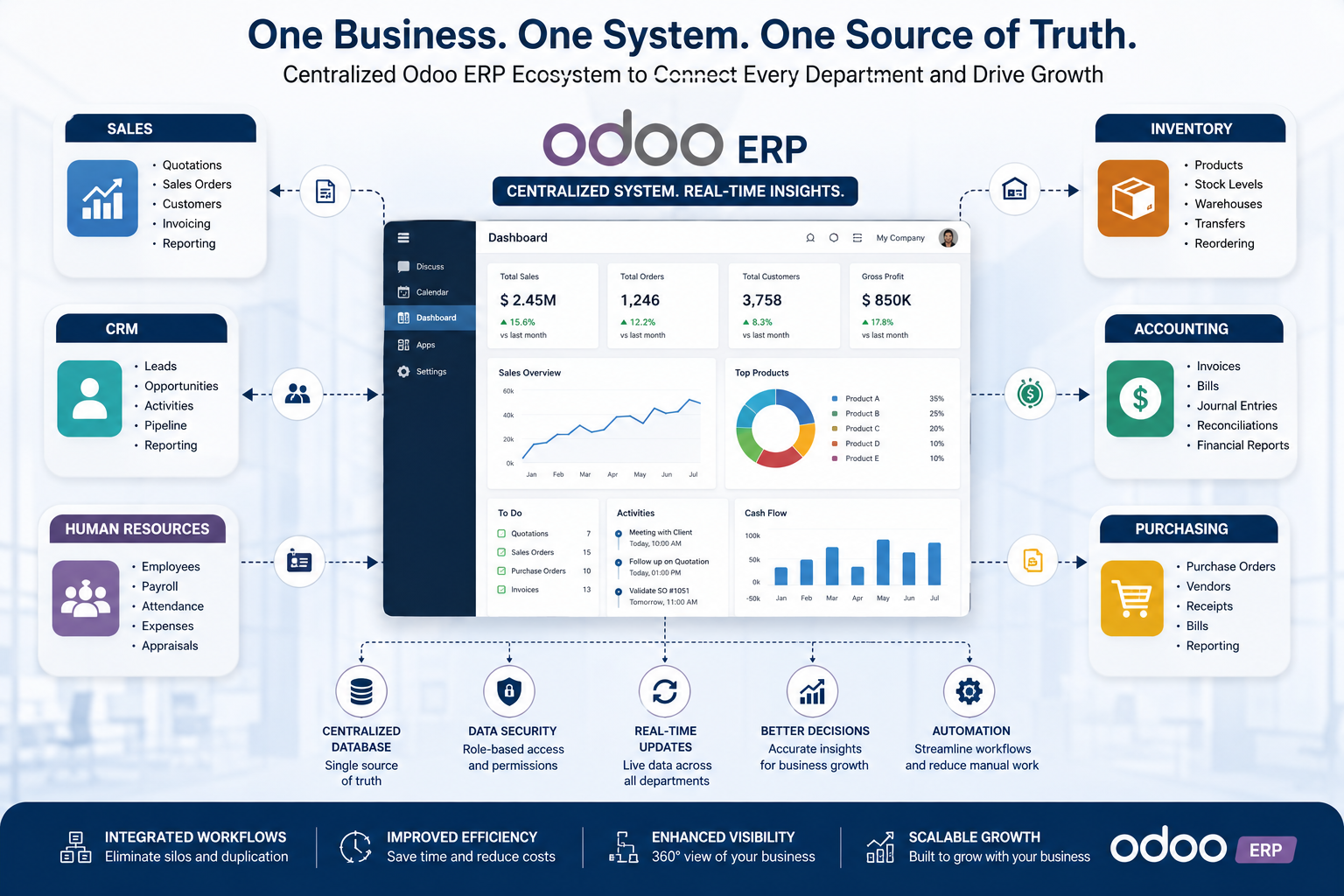
One of the primary reasons businesses are adopting Odoo ERP is the ability to centralize operations within a single platform.
Instead of maintaining separate spreadsheets for sales, inventory, accounting, purchasing, human resources, and customer management, Odoo integrates all departments into one system. Information entered by one department becomes instantly available to others, eliminating duplication and improving accuracy.
For example, when a sales order is confirmed, inventory levels are automatically updated, accounting records are generated, and delivery processes can begin without requiring manual intervention.
This level of integration creates a more efficient and connected business environment.
Real-Time Access to Business Data

Business leaders today require immediate access to accurate information. Decisions based on outdated reports can lead to missed opportunities and operational inefficiencies.
Excel reports often require manual updates and consolidation before they can be shared with management. This process consumes valuable time and may result in outdated information.
Odoo ERP provides real-time dashboards and reporting tools that allow businesses to monitor sales performance, inventory availability, cash flow, customer activities, and operational metrics instantly. Decision-makers can access current data whenever needed, enabling faster and more informed business decisions.
For organizations managing years of Excel data, professional Odoo Migration Services can ensure a smooth transition without data loss or operational disruptions.
Improved Accuracy and Reduced Human Error
Manual data entry remains one of the biggest risks associated with spreadsheet-based management.
Formula errors, accidental deletions, incorrect calculations, and duplicated records can create serious operational and financial problems. Even a small mistake can affect reporting accuracy and business performance.
Odoo ERP reduces these risks through automation and standardized workflows. Transactions are recorded automatically, calculations are system-generated, and approval processes help ensure data accuracy. This significantly reduces the likelihood of human error while improving operational consistency.
Enhanced Collaboration Across Departments
Modern businesses require seamless communication and collaboration between teams.
When departments operate using separate spreadsheets, information sharing becomes difficult. Teams may work with outdated data, leading to delays and miscommunication.
Odoo ERP creates a shared environment where employees can access relevant information in real time. Sales teams can view inventory availability, finance teams can monitor payment status, procurement teams can track supplier activities, and management can oversee overall business performance.
This transparency improves coordination and helps organizations operate more efficiently.
Scalability for Business Growth
While Excel may be sufficient for small-scale operations, growing businesses eventually reach a point where spreadsheets become difficult to manage.
Increasing transaction volumes, expanding product lines, multiple business locations, and larger customer databases create complexity that spreadsheets cannot efficiently handle.
Odoo ERP is designed to scale alongside business growth. Whether an organization is expanding its workforce, opening new branches, entering new markets, or increasing production capacity, Odoo provides the flexibility needed to support long-term expansion.
Businesses can continue growing without constantly rebuilding their operational systems.
Advanced Inventory Management
Inventory management is one of the areas where the limitations of Excel become most apparent.
Manual inventory tracking often results in stock discrepancies, excess inventory, stock shortages, and inaccurate reporting. These issues can negatively impact customer satisfaction and profitability.
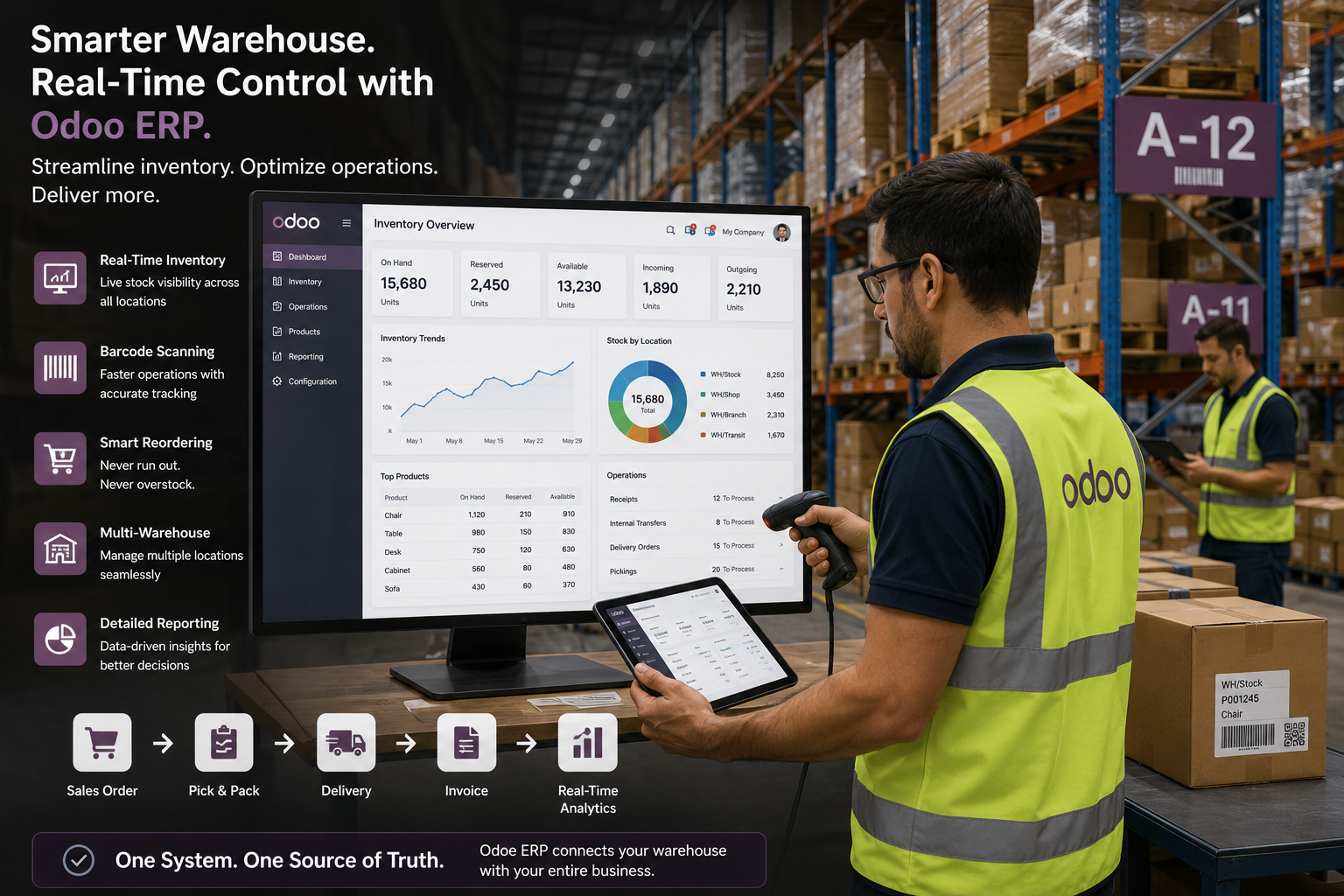
Odoo ERP offers advanced inventory management capabilities, including real-time stock tracking, warehouse management, barcode scanning, automated replenishment, batch tracking, and multi-location inventory control.
These features help businesses improve inventory accuracy, reduce operational costs, and maintain optimal stock levels.
Stronger Financial Management
Financial management requires accuracy, transparency, and timely reporting.
Organizations relying on spreadsheets often spend significant time preparing reports, reconciling accounts, and managing invoices manually. These processes increase workload and create opportunities for errors.
Odoo ERP streamlines financial operations through automated invoicing, payment tracking, bank reconciliation, expense management, budgeting, and financial reporting. Finance teams gain greater visibility into organizational performance while reducing administrative effort.
This enables businesses to maintain stronger financial control and make more strategic decisions.
Better Customer Relationship Management
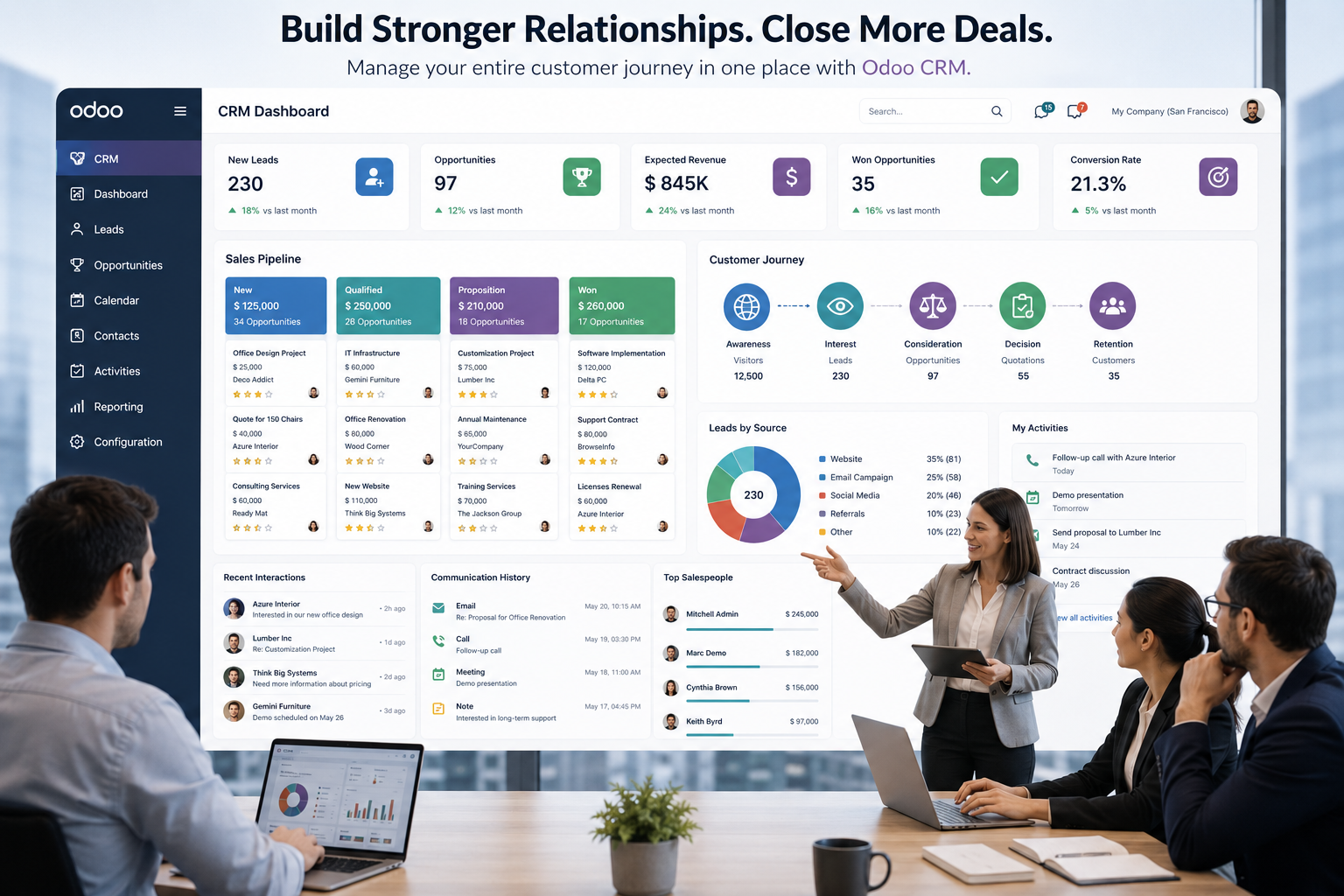
Customer expectations continue to rise, making relationship management more important than ever.
Businesses that store customer information across multiple spreadsheets often struggle with fragmented communication and missed opportunities.
Odoo CRM provides a centralized platform for managing leads, opportunities, customer interactions, quotations, and sales activities. Sales teams can track every stage of the customer journey, improving engagement and increasing conversion rates.
A well-managed customer relationship strategy contributes directly to revenue growth and customer retention.
Increased Automation and Productivity
Many business processes that are managed through spreadsheets require repetitive manual work.
Tasks such as generating reports, updating records, processing orders, managing approvals, and tracking inventory consume valuable employee time.
Odoo ERP automates these activities through configurable workflows and intelligent business processes. Employees spend less time on administrative tasks and more time on activities that contribute to business growth.
This improvement in productivity is one of the most significant benefits of ERP adoption.
Enhanced Data Security
Data security has become a critical concern for organizations of all sizes.
Spreadsheet files are often shared through email or stored on local devices, increasing the risk of unauthorized access, accidental deletion, and data loss.
Odoo ERP offers role-based access controls, user permissions, audit trails, secure cloud hosting options, and regular backup capabilities. These features help businesses protect sensitive information while maintaining compliance and operational security.
Industries Leading the Shift to Odoo ERP
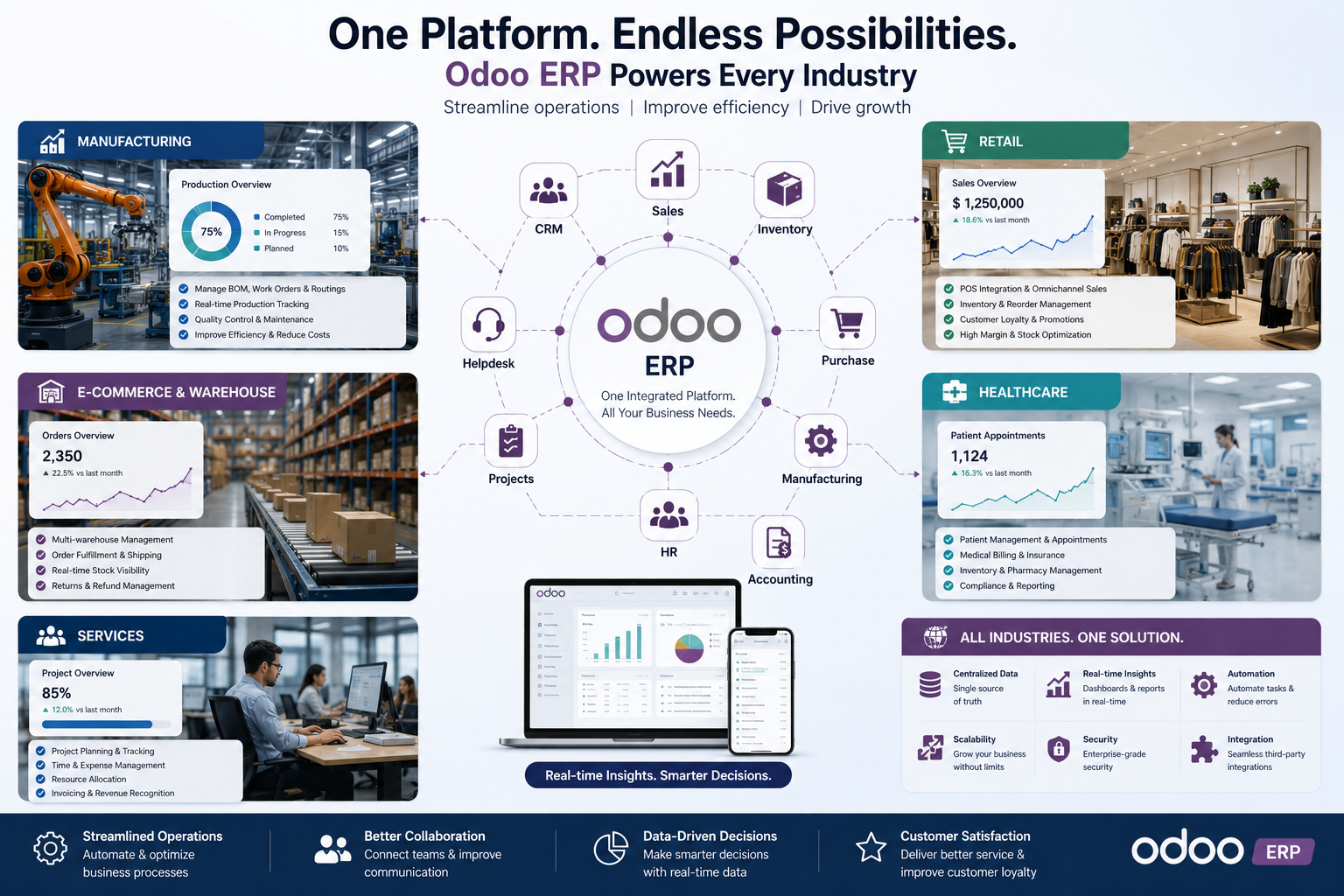
Several industries are rapidly adopting Odoo ERP to improve operational efficiency and manage increasing complexity.
Manufacturing companies use Odoo to manage production planning, procurement, inventory, maintenance, and quality control.
Retail and eCommerce businesses rely on Odoo for inventory synchronization, customer management, sales operations, and order fulfillment.
Wholesale distributors use the platform to streamline warehouse operations, supplier management, and order processing.
Professional service organizations benefit from project management, resource allocation, billing, and performance tracking capabilities.
Healthcare organizations utilize Odoo to improve operational management, procurement processes, inventory control, and financial administration.
Signs Your Business Has Outgrown Excel

Many organizations continue using spreadsheets long after they have become ineffective. Common indicators that a business may be ready for ERP implementation include frequent reporting delays, inconsistent data across departments, inventory inaccuracies, increasing manual workloads, limited visibility into operations, and difficulties scaling business processes.
If employees spend significant time maintaining spreadsheets rather than performing strategic work, it may be time to consider a more integrated solution.
The Long-Term Value of Odoo ERP
The transition from Excel to Odoo ERP is not simply a software upgrade. It represents a strategic investment in operational efficiency and business growth.
Organizations that implement Odoo ERP often experience improved productivity, greater data accuracy, stronger financial control, better customer experiences, enhanced collaboration, and more informed decision-making.
Most importantly, businesses gain the foundation needed to support future growth without being constrained by outdated systems and manual processes.
Why Partner with Odiware for Odoo ERP Implementation
A successful ERP implementation requires careful planning, process optimization, data migration, user training, and ongoing support.
Odiware Technologies helps businesses successfully transition from spreadsheet-based operations to a fully integrated Odoo ERP environment. With expertise in implementation, customization, integration, and support, Odiware enables organizations to maximize the value of their ERP investment while minimizing disruption to daily operations.
By aligning technology with business objectives, Odiware helps organizations achieve greater efficiency, scalability, and competitive advantage.
Conclusion
The business landscape of 2026 demands greater agility, visibility, and operational efficiency than ever before. While Excel remains a valuable tool for data analysis and reporting, it is no longer sufficient as a primary business management system for growing organizations.
Odoo ERP addresses the limitations of spreadsheets by centralizing operations, automating workflows, improving data accuracy, and providing real-time business insights. As companies continue their digital transformation journeys, the shift from Excel to Odoo ERP is becoming a strategic necessity rather than an optional upgrade.
Businesses that embrace integrated ERP solutions today will be better positioned to improve performance, support growth, and remain competitive in an increasingly data-driven marketplace.
If you're evaluating whether Odoo is the right fit for your business, expert Odoo Consulting Services can help identify the best modules, workflows, and implementation approach.
Get a free 30-minute review with an Odiware Odoo consultant — bring your current setup and we'll map the fastest route to a working configuration.
 ODOO IMPLEMENTATION PARTNER