Warehouse Accuracy
Barcode scanning done right eliminates most manual stock-count discrepancies
before they ever reach a financial report — the fix is almost always in how
scanning is configured at the operation level, not the hardware.
A Pipeline People Actually Use
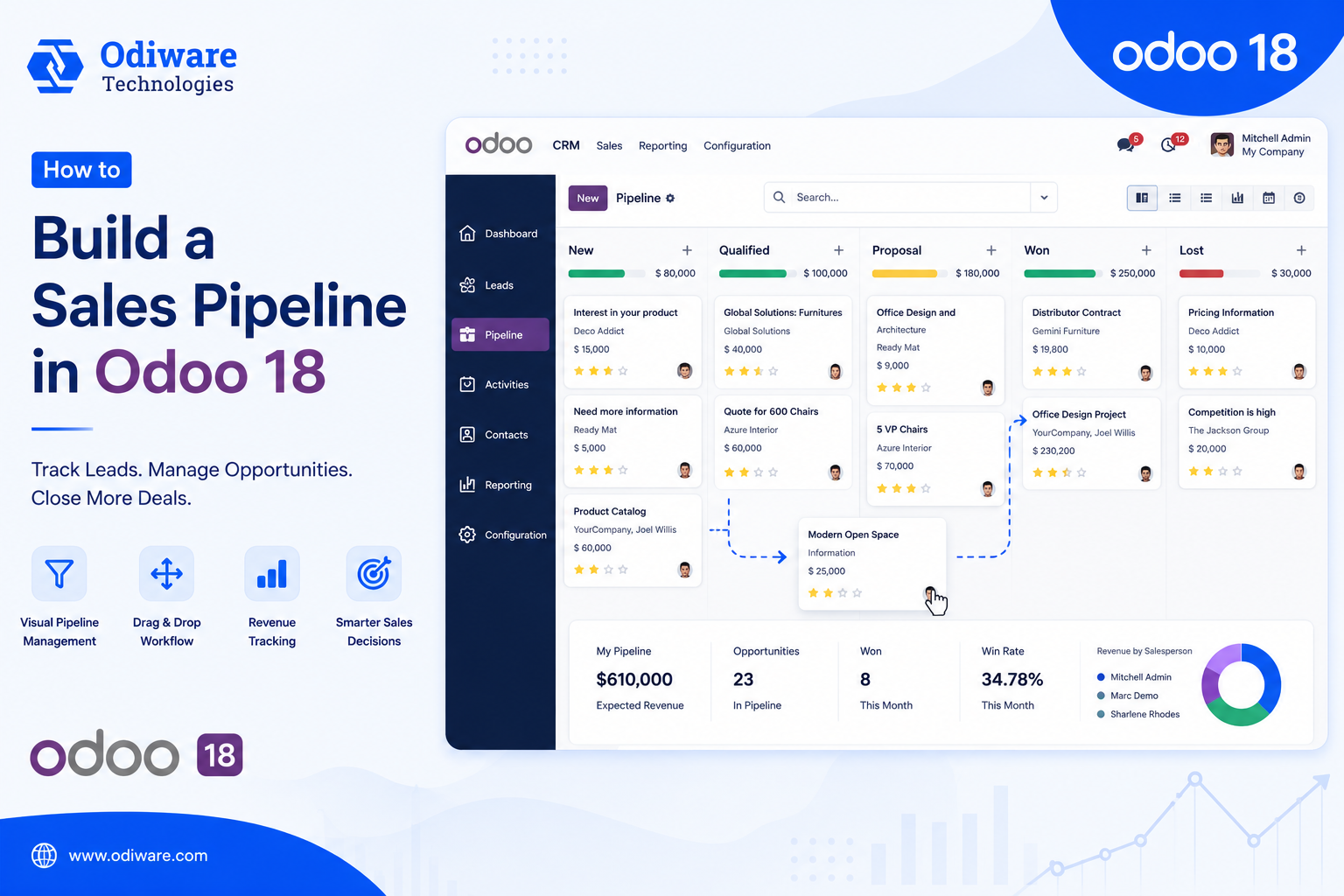
A sales pipeline only creates value if reps update it. Stage design and
automation matter more than which CRM features are technically available —
see our Odoo CRM Software page for how we approach adoption, not just configuration.
Odoo vs. Dedicated E-Commerce
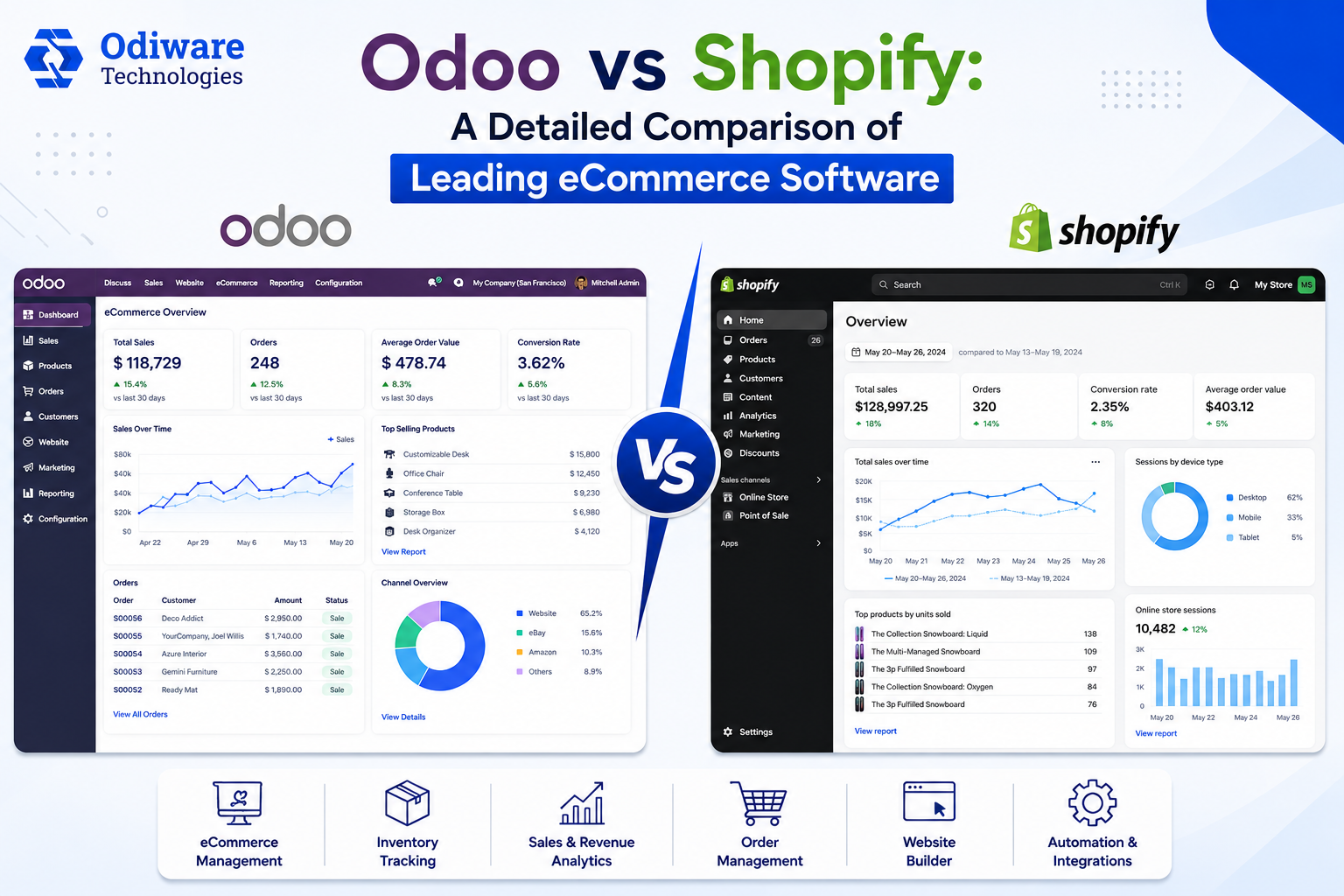
Shopify and similar platforms win on storefront polish; Odoo wins when
inventory, accounting, and the storefront need to stay in sync without manual
reconciliation. The right answer depends on order volume and how much you value
a single source of truth.

 ODOO IMPLEMENTATION PARTNER