The textile industry is one of the fastest-growing manufacturing industries across the globe. From yarn production to fabric manufacturing and garment production, every stage of textile manufacturing requires proper coordination and management. The collection of raw materials, production planning, quality checking, inventory handling, and delivery management are all important parts of the textile industry.
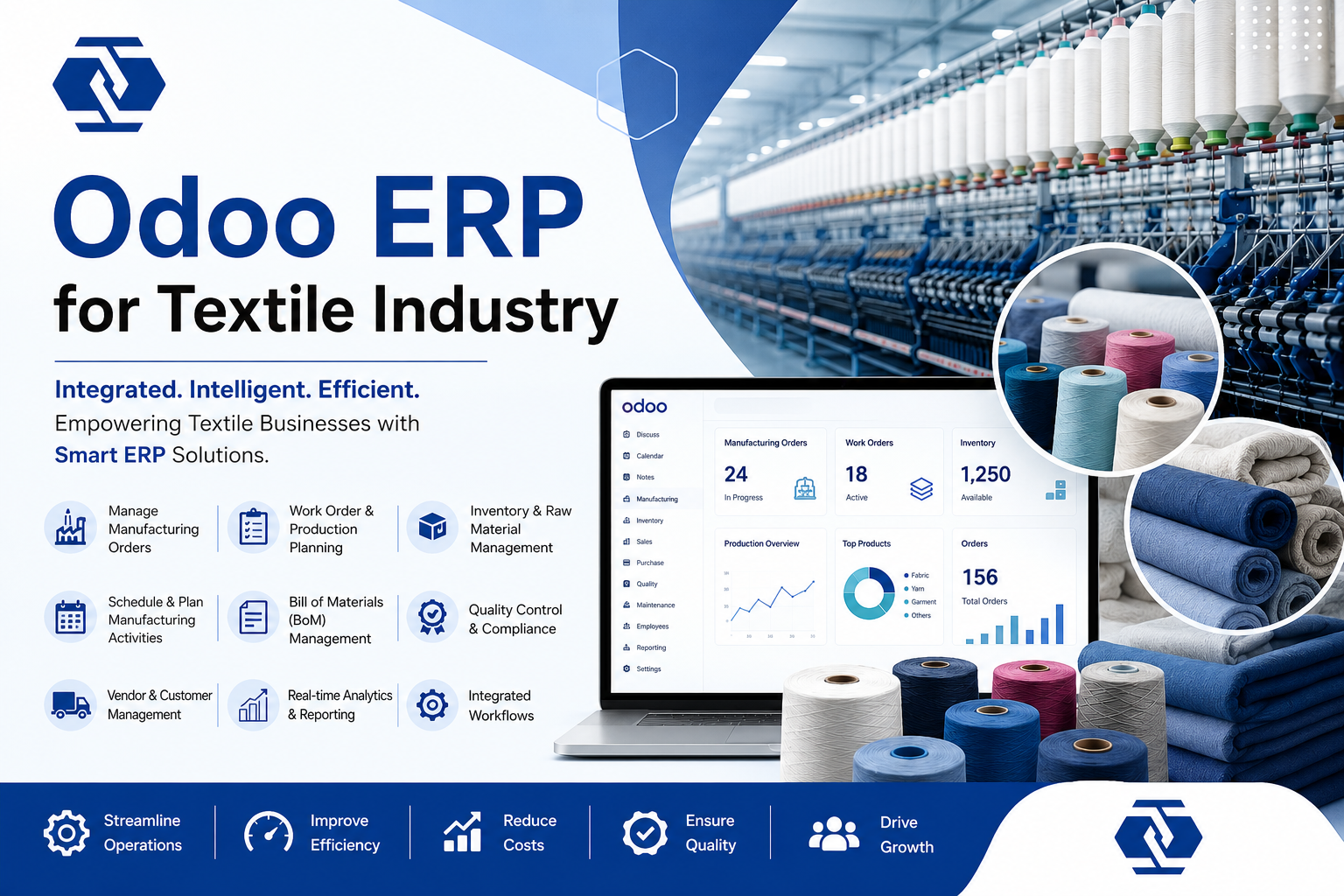
The textile industry is one of the fastest-growing manufacturing industries across the globe. From yarn production to fabric manufacturing and garment production, every stage of textile manufacturing requires proper coordination and management. The collection of raw materials, production planning, quality checking, inventory handling, and delivery management are all important parts of the textile industry.
The textile industry produces a wide range of products from natural and synthetic materials. Different manufacturing stages, including spinning, weaving, dyeing, printing, and packaging, require proper planning and workflow management. As the industry continues to grow, managing all operations manually becomes difficult and time-consuming.
How Important is an ERP for the Textile Industry?
An ERP system plays an important role in managing textile manufacturing operations effectively. It helps textile businesses coordinate different stages of production and simplifies the management of manufacturing activities.
From procurement of raw materials to inventory management, production planning, employee scheduling, sales management, and customer handling, an ERP system helps businesses streamline every process.
The textile industry involves multiple departments working together simultaneously. Managing all operations through disconnected systems often creates delays, production errors, and communication gaps. An ERP system centralizes all operations into a single platform and improves efficiency across departments.
An efficient ERP solution for the textile industry should help businesses:
- Manage manufacturing operations
- Track raw materials and finished goods
- Plan production schedules
- Improve supply chain coordination
- Reduce operational delays
- Monitor quality control processes
- Handle customer and vendor management
Why Use Odoo ERP for the Textile Industry?
Odoo ERP is one of the most advanced ERP solutions for manufacturing industries. It provides powerful tools for managing production planning, inventory control, work orders, maintenance, quality management, and supply chain operations.
Odoo ERP for the textile industry helps businesses automate workflows and manage manufacturing operations efficiently. The platform integrates multiple departments into a single system and provides real-time visibility into business operations.
Textile manufacturers can use Odoo ERP to:
- Manage manufacturing orders
- Track production stages
- Plan work schedules
- Control inventory
- Manage quality checks
- Monitor machine maintenance
- Improve customer communication
- Analyze business performance
The flexibility and scalability of Odoo ERP make it suitable for small, medium, and large textile businesses.
Manage Manufacturing Orders
Managing manufacturing orders is one of the most important tasks in the textile industry. Textile businesses receive orders from different customers with different product specifications, quantities, and delivery schedules.
Odoo ERP helps businesses create and manage manufacturing orders efficiently. The system allows manufacturers to monitor production progress, allocate resources, and track deadlines in real time.
Manufacturing orders can be managed across multiple departments and production units, improving coordination and reducing delays.
Work Order Management
Work order management helps textile businesses organize manufacturing activities properly. It includes assigning tasks, allocating workforce, managing raw materials, and tracking production timelines.
Odoo ERP for the textile industry allows businesses to create work orders based on manufacturing requirements. Managers can allocate tasks to different departments including spinning, weaving, dyeing, printing, stitching, and packaging.
The system also helps calculate workforce requirements, machine availability, and estimated completion time for each task.
Proper work order management reduces material wastage and improves operational efficiency.
Schedule and Plan Manufacturing Activities
Planning and scheduling are essential for ensuring the timely completion of textile manufacturing operations.
Textile businesses deal with multiple manufacturing stages, such as:
- Fiber processing
- Yarn manufacturing
- Weaving
- Dyeing
- Printing
- Finishing
- Packaging
Each stage requires proper coordination and scheduling.
Odoo ERP helps businesses create production schedules based on:
- Manufacturing orders
- Available inventory
- Workforce availability
- Machine capacity
- Delivery deadlines
This helps businesses optimize production operations and improve resource utilization.
Plan Textile Manufacturing Processes
Production planning plays a major role in improving the efficiency of textile manufacturing businesses.
Textile manufacturers often need to plan production based on:
- Seasonal demand
- Customer orders
- Market trends
- Export requirements
- Material availability
Odoo ERP helps businesses manage and plan textile manufacturing operations effectively.
Different processes, including spinning, weaving, yarn dyeing, fabric production, printing, and packaging, can be monitored and managed within a centralized system.
Organize Work Orders Efficiently
Work order organization is important for maintaining smooth production operations.
Odoo ERP helps textile businesses:
- Segment work orders
- Prioritize production tasks
- Allocate resources
- Approve manufacturing processes
- Assign work to different departments
The system also enables businesses to schedule tasks based on production capacity and available workforce.
This improves production coordination and ensures the timely delivery of finished products.
Manage Bill of Materials (BoM)
Bill of Materials management is important for controlling the quality and composition of textile products.
Odoo ERP allows businesses to create detailed Bills of Materials for different textile products. Manufacturers can define:
- Raw material specifications
- Product variants
- Fabric compositions
- Dyeing formulas
- Packaging materials
The platform also supports multi-level Bills of Materials and routing management for different production stages.
This improves production accuracy and inventory management.
Work Center Capacity Management
Work center capacity management helps businesses understand machine availability, workforce utilization, and production limits.
Odoo ERP automatically calculates:
- Machine working hours
- Production capacity
- Shift schedules
- Workforce allocation
- Equipment utilization
This helps textile businesses maximize productivity while avoiding overloading of resources.
Managers can also monitor work center performance and improve operational planning.
Flexible Master Data Management
Master data management helps businesses maintain important operational information in a centralized system.
Odoo ERP enables textile manufacturers to manage:
- Product data
- Supplier information
- Customer records
- Production details
- Inventory data
- Sales history
Centralized master data management improves reporting accuracy and helps businesses make better decisions.
Optional Routing Management
Routing management helps textile businesses assign work orders to different work centers based on production requirements.
Odoo ERP allows businesses to route manufacturing tasks to departments such as:
- Spinning units
- Weaving sections
- Dyeing departments
- Printing units
- Packaging centers
This improves workflow distribution and production efficiency.
The routing feature also helps businesses manage decentralized manufacturing operations effectively.
Quality Control Management
Quality control is one of the most important aspects of textile manufacturing.
Textile businesses must maintain consistent product quality to satisfy customer expectations and remain competitive in the market.
Odoo ERP helps businesses implement quality checks throughout the manufacturing process.
Quality inspections can be performed during:
- Raw material procurement
- Yarn production
- Fabric processing
- Dyeing operations
- Printing activities
- Final product inspection
The system also generates quality alerts and helps businesses identify defective products quickly.
Manage Semi-Finished Products
Semi-finished products play an important role in textile manufacturing operations.
Textile businesses often store or sell products such as:
- Yarn
- Processed fabric
- Dyed materials
- Woven textiles
Odoo ERP helps businesses manage semi-finished goods effectively by providing proper inventory tracking and storage management.
The system also helps manufacturers manage internal transfers and monitor stock movement efficiently.
Repair Management
Repair management is essential for maintaining production continuity in textile industries.
Odoo ERP allows businesses to:
- Register repair requests
- Track maintenance activities
- Schedule equipment repairs
- Monitor machine performance
- Reduce production downtime
Efficient repair management helps textile businesses improve machine utilization and reduce operational interruptions.
Customer Satisfaction Management
Customer satisfaction is essential for business growth in the textile industry.
Odoo ERP includes CRM features that help businesses manage:
- Customer information
- Sales orders
- Communication history
- Quotations
- Follow-ups
- Service requests
The platform also supports automated emails and customer communication workflows.
This improves customer relationships and enhances overall business performance.
Production Planning and Forecasting
Planning future production operations is important for textile businesses.
Odoo ERP provides reporting and analytics tools that help businesses analyze:
- Sales performance
- Production trends
- Inventory movement
- Demand forecasts
- Operational efficiency
These insights help businesses improve planning accuracy and optimize manufacturing operations.
Supply Chain Routing
Supply chain management is critical in textile manufacturing because businesses depend on multiple suppliers and distribution channels.
Odoo ERP helps businesses manage:
- Procurement operations
- Supplier coordination
- Product movement
- Warehouse transfers
- Distribution planning
The routing system ensures smooth movement of materials and finished goods throughout the supply chain.
Equipment Management
Textile manufacturing depends heavily on machinery and production equipment.
Odoo ERP helps businesses manage:
- Equipment maintenance
- Machine utilization
- Maintenance scheduling
- Repair approvals
- Performance monitoring
Regular maintenance management helps reduce machine downtime and improves production efficiency.
Why Choose Odiware for Textile ERP Solutions?
Odiware provides customized Odoo ERP solutions for textile manufacturing businesses.
With expertise in ERP implementation and manufacturing automation, Odiware helps textile businesses improve operational efficiency and streamline manufacturing workflows.
The company offers:
- Odoo ERP implementation
- ERP customization
- Manufacturing workflow automation
- Integration services
- Technical support
- ERP consulting
Odiware helps textile businesses choose the right ERP solution based on their operational requirements and business goals.
Conclusion
The textile industry requires efficient planning, production management, quality control, inventory handling, and supply chain coordination to remain competitive in today’s market.
Odoo ERP helps textile businesses automate manufacturing operations, improve workflow management, reduce operational delays, and increase productivity.
With the support of Odiware, textile businesses can successfully implement Odoo ERP solutions and build a smarter, more efficient manufacturing system.
Get a free 30-minute review with an Odiware Odoo consultant — bring your current setup and we'll map the fastest route to a working configuration.
 ODOO IMPLEMENTATION PARTNER