


Why Your Business Needs a Strategic Odoo ERP Implementation
In today’s fast-paced business world, efficiency is key. Companies constantly seek ways to streamline operations and boost productivity. This often leads them to powerful Enterprise Resource Planning (ERP) systems. Odoo stands out as a flexible and comprehensive solution. However, a successful Odoo ERP implementation is more than just installing software. It is a strategic business transformation.
Many organizations struggle with disconnected systems. They face redundant data entry and fragmented workflows. This slows down growth and affects decision-making. A well-executed Odoo ERP implementation addresses these challenges directly. It integrates all core business functions into one unified platform. This includes sales, CRM, accounting, manufacturing, inventory, and more.
At Odiware, we understand these complexities. We have guided numerous businesses through their digital transformation journey. Our experience shows that proper planning and expert guidance are crucial for success. This guide will help you understand the core aspects of an effective Odoo ERP implementation. It will prepare you for a smooth transition and lasting benefits.
Understanding the Scope of Odoo ERP Implementation
An Odoo ERP implementation involves integrating various business processes. It brings them onto the Odoo platform. This process goes beyond mere software installation. It includes detailed analysis, configuration, customization, data migration, and user training. The goal is to align Odoo’s capabilities with your specific operational needs.
Think of it as building a new central nervous system for your company. Every department needs to connect and communicate effectively. A successful Odoo ERP implementation ensures this connectivity. It allows information to flow freely across your organization. This leads to better insights and faster decisions. You can find more insights on this topic in a comprehensive Odoo ERP implementation guide for 2025.
The benefits are significant. You gain improved data accuracy and reduced operational costs. You also see enhanced customer service and greater scalability. This allows your business to adapt and grow. However, achieving these benefits requires a structured approach. It needs expertise from the outset. This is where a seasoned Odoo consulting partner becomes invaluable.
Key Phases of a Successful Odoo ERP Implementation Project
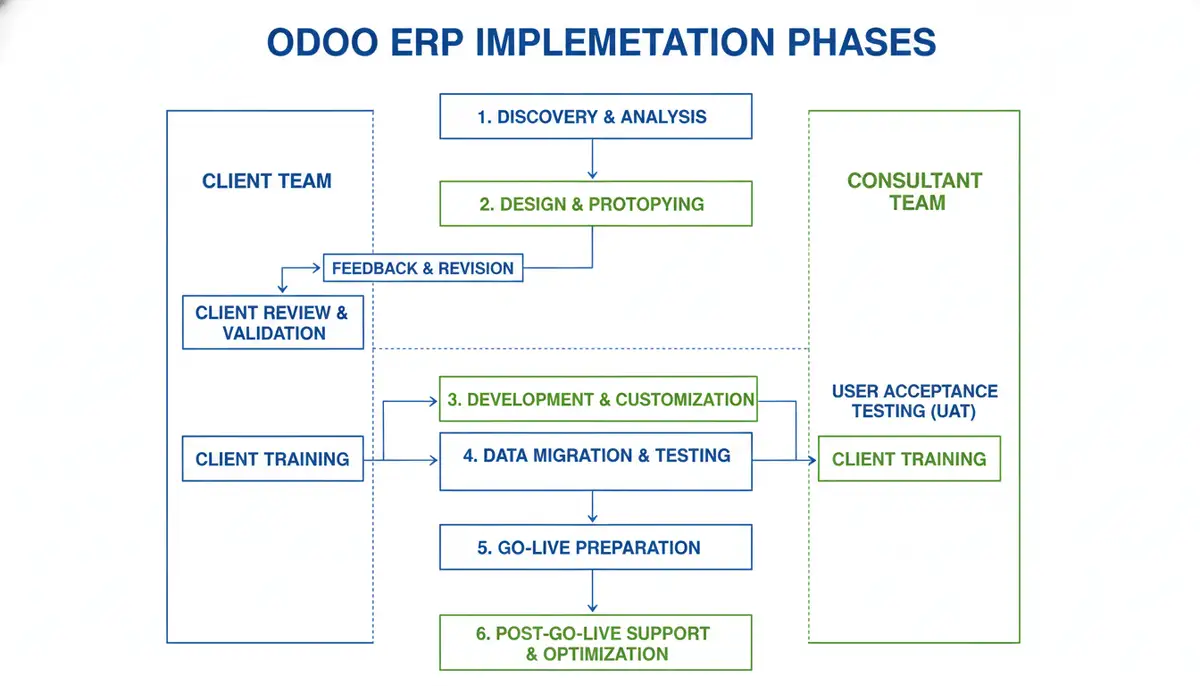
Every Odoo ERP implementation follows a series of critical steps. Each phase builds upon the last. Understanding these phases is vital for managing expectations and ensuring a smooth rollout. A clear timeline helps manage the entire process, as detailed in this Odoo implementation timeline guide.
1. Discovery and Planning
This initial stage is foundational. We work closely with your team to understand your current processes. We identify pain points and define clear business objectives. This includes assessing your existing systems and workflows. We also map out your future state with Odoo. A detailed project plan emerges from this phase. It outlines scope, timelines, resources, and key performance indicators (KPIs).

Effective communication is paramount here. Both your team and our consultants must be aligned. This ensures everyone understands the project’s vision. It sets realistic expectations for the entire Odoo ERP implementation journey. Skipping this step often leads to costly rework later on.
2. Design and Configuration
Once planning is complete, we move to design. This involves configuring Odoo modules to match your defined requirements. We set up workflows, user roles, and access rights. We also customize reports and dashboards. The goal is to optimize Odoo’s standard features for your unique business needs.
This phase often includes several feedback loops. Your team reviews prototypes and provides input. This iterative process ensures the configured system meets expectations. It also helps in identifying any gaps early. Careful configuration minimizes the need for extensive custom development.
3. Development and Customization
Sometimes, Odoo’s out-of-the-box features are not enough. This is especially true for highly specialized industries. In such cases, custom development becomes necessary. This might involve creating new modules or modifying existing ones. It could also mean developing specific integrations. Our team of expert developers handles these customizations. They ensure seamless functionality within your Odoo ERP implementation. For deeper insights into this area, consider exploring our guide on mastering Odoo ERP software development.
Customizations are always approached strategically. We prioritize solutions that add significant business value. We also ensure they are scalable and maintainable. This avoids creating technical debt. It protects your investment in the long term. This phase is critical for tailoring Odoo perfectly to your operational demands.
4. Data Migration
Moving data from old systems to Odoo is a critical step. It requires meticulous planning and execution. This includes customer records, product catalogs, financial data, and historical transactions. Data cleansing is often a key part of this process. We ensure data accuracy and integrity. This prevents issues after go-live.
Our consultants use robust tools and methodologies for data migration. We minimize disruption to your ongoing operations. Proper data migration is essential. It ensures your new Odoo ERP implementation starts with reliable information. This supports accurate reporting and decision-making from day one.
5. Testing and Training
Thorough testing is non-negotiable. We conduct various tests to ensure system stability and functionality. This includes unit testing, integration testing, and user acceptance testing (UAT). Your team actively participates in UAT. This validates that Odoo meets all business requirements. It also helps identify any final adjustments needed.
Alongside testing, comprehensive user training is vital. We provide tailored training sessions for different user groups. This empowers your employees to use Odoo effectively. It builds confidence and ensures user adoption. A well-trained team is crucial for the long-term success of your Odoo ERP implementation.
6. Go-Live and Post-Implementation Support
The ‘go-live’ moment is exciting. It’s when your new Odoo system becomes fully operational. We provide on-site or remote support during this critical transition. This helps resolve any immediate issues. Our team ensures a smooth switch from your old systems.
Post-implementation support is equally important. We offer ongoing assistance, maintenance, and optimization services. This ensures your Odoo ERP implementation continues to perform optimally. It also helps you adapt to evolving business needs. Our partnership extends beyond the initial launch.
Best Practices for Your Odoo ERP Implementation
Successful Odoo ERP implementation relies on adhering to proven strategies. These best practices minimize risks and maximize your return on investment. They ensure your project stays on track and delivers expected results.
- Define clear objectives: Know what you want to achieve with Odoo. Specific, measurable goals guide the entire project.
- Secure executive sponsorship: Strong leadership support drives user adoption and resource allocation.
- Assemble a dedicated project team: Involve key stakeholders from various departments. This ensures all perspectives are considered.
- Prioritize phased implementation: Tackle complex modules in stages. This reduces risk and allows for quicker wins.
- Invest in thorough training: Empower your users with the knowledge they need. Proper training prevents frustration and ensures system utilization.
- Plan for change management: Prepare your employees for new processes. Communicate benefits and address concerns proactively.
- Choose the right partner: Select an Odoo consultant with proven experience. Their expertise is invaluable for navigating complexities.
Following these guidelines will significantly improve your chances of success. They lay the groundwork for a robust and efficient Odoo ERP implementation. This proactive approach saves time and resources in the long run.
Common Pitfalls to Avoid During Odoo ERP Implementation
Even with the best intentions, Odoo ERP implementation projects can face challenges. Being aware of common pitfalls helps you steer clear of them. Recognizing these issues early can save your project from delays and budget overruns.
| Pitfall | Impact on Odoo ERP Implementation | Mitigation Strategy |
|---|---|---|
| Lack of clear scope | Project creep, budget overruns, unmet expectations. | Establish detailed requirements and a firm scope during planning. |
| Insufficient user training | Low user adoption, resistance to change, reduced productivity. | Develop comprehensive training programs and provide ongoing support. |
| Poor data quality | Inaccurate reports, flawed decisions, operational inefficiencies. | Implement robust data cleansing and migration protocols. |
| Resistance to change | Employee dissatisfaction, system underutilization. | Involve users early, communicate benefits, offer incentives, and provide support. |
| Inadequate testing | System bugs, operational disruptions after go-live. | Conduct thorough unit, integration, and user acceptance testing. |
Avoiding these common mistakes is crucial. It ensures your Odoo ERP implementation delivers its full potential. A proactive and informed approach makes all the difference. It protects your investment and streamlines your business processes.

When to Engage an Odoo Consultant for Your Odoo ERP Implementation
While Odoo is user-friendly, its implementation can be complex. Especially for businesses with unique needs or large scale. Engaging an experienced Odoo consultant is often the smartest move. This is true whether you are a small business or a large enterprise. Consultants bring specialized knowledge and a structured approach.
You should consider a consultant if you lack internal expertise. This includes project management or technical Odoo skills. Also, if your business processes are highly customized. A consultant helps navigate complex integrations. They ensure your Odoo ERP implementation aligns with best practices. They also help avoid common pitfalls. Odiware offers comprehensive Odoo implementation services tailored to your specific needs.
A good consultant acts as a strategic partner. They guide you through every phase. They ensure your Odoo ERP implementation is successful. This includes initial discovery to post-go-live support. They bring an objective perspective. This helps make informed decisions throughout the project.
The Odiware Advantage: Your Partner in Odoo ERP Implementation
At Odiware Technologies, we specialize in Odoo ERP implementation and custom software solutions. We help businesses like yours streamline operations. Our goal is to enhance your productivity and drive growth. We understand the nuances of various industries. This allows us to deliver tailored Odoo solutions.
Our approach is client-centric. We focus on understanding your unique business challenges. Then, we design and implement an Odoo solution. This solution directly addresses those challenges. We pride ourselves on transparent communication and timely delivery. Our team has extensive experience. They ensure a smooth and effective Odoo ERP implementation.
While companies like Cybrosys, O2B Technologies, and Ksolves also offer Odoo services, Odiware distinguishes itself through its deep understanding of client-specific needs and a commitment to long-term partnership. We don’t just implement; we empower your business. We ensure you get the most out of your Odoo ERP investment. Our comprehensive support ensures your system evolves with your business.
We also excel in complex scenarios. These often involve integrating Odoo with other critical systems. Our expertise in mastering Odoo ERP integration ensures all your platforms work together seamlessly. This creates a truly unified business ecosystem. Your Odoo ERP implementation becomes a powerful engine for growth.
Frequently Asked Questions About Odoo ERP Implementation
- How long does an Odoo ERP implementation typically take? The timeline varies greatly. It depends on your business size, complexity, and customization needs. A small business might take a few weeks. A large enterprise could take several months. Proper planning helps set realistic expectations.
- What are the main cost factors for Odoo ERP implementation? Costs include licensing (for Odoo Enterprise), consulting fees, customization development, data migration, and training. Cloud hosting fees are also a factor if you choose a cloud-based solution. The total investment depends on your specific requirements.
- Can we integrate Odoo with our existing systems? Yes, Odoo is highly flexible. It offers various integration capabilities. These include APIs and connectors. We can integrate Odoo with CRM, e-commerce platforms, payment gateways, and other third-party applications. This creates a unified data flow.
- What kind of support is available after Odoo goes live? Post-implementation support typically includes technical assistance, bug fixes, system maintenance, and performance monitoring. We also offer ongoing consultation for future enhancements and module upgrades. Our goal is continuous optimization.
Conclusion: Your Path to a Successful Odoo ERP Implementation

Undertaking an Odoo ERP implementation is a significant step. It can transform your business operations. It can drive efficiency and foster growth. The journey requires careful planning, expert execution, and a clear vision. It is more than just a software project. It is a strategic investment in your company’s future.
By understanding the key phases, adopting best practices, and avoiding common pitfalls, you set yourself up for success. Remember, the right Odoo consulting partner makes all the difference. They guide you through every challenge. They ensure your Odoo ERP implementation delivers tangible value. This will empower your business for years to come.
Ready to explore how Odoo can revolutionize your business? Considering a new Odoo ERP implementation or optimizing an existing one? Don’t navigate this complex landscape alone. Let Odiware’s expert consultants be your trusted guide. We help you unlock Odoo’s full potential. Try Free Trial to see Odoo in action, or connect with us for a personalized consultation. Your journey to enhanced operational excellence starts here.


