Navigating Your Software Choices: The Core Difference Between SaaS and Enterprise Software
In today’s fast-evolving digital landscape, choosing the right software solution is paramount for business success. Companies constantly face a pivotal decision: should they opt for a flexible, cloud-based platform or a robust, on-premise system? Understanding the fundamental difference between SaaS and enterprise software is not just an IT concern; it is a strategic business imperative. This choice impacts everything from your budget and operational agility to data security and long-term growth potential. As an Odoo consultant, we often guide businesses through this complex decision, helping them align technology with their unique objectives.
Many organizations struggle to discern which model best fits their specific needs. They face questions about scalability, customization, and total cost of ownership. This article will demystify the core distinctions, providing you with a clear framework. We will explore the characteristics, benefits, and drawbacks of each model. Our goal is to empower you to make an informed choice that propels your business forward, especially when considering comprehensive ERP solutions like Odoo.
Understanding SaaS: Software as a Service
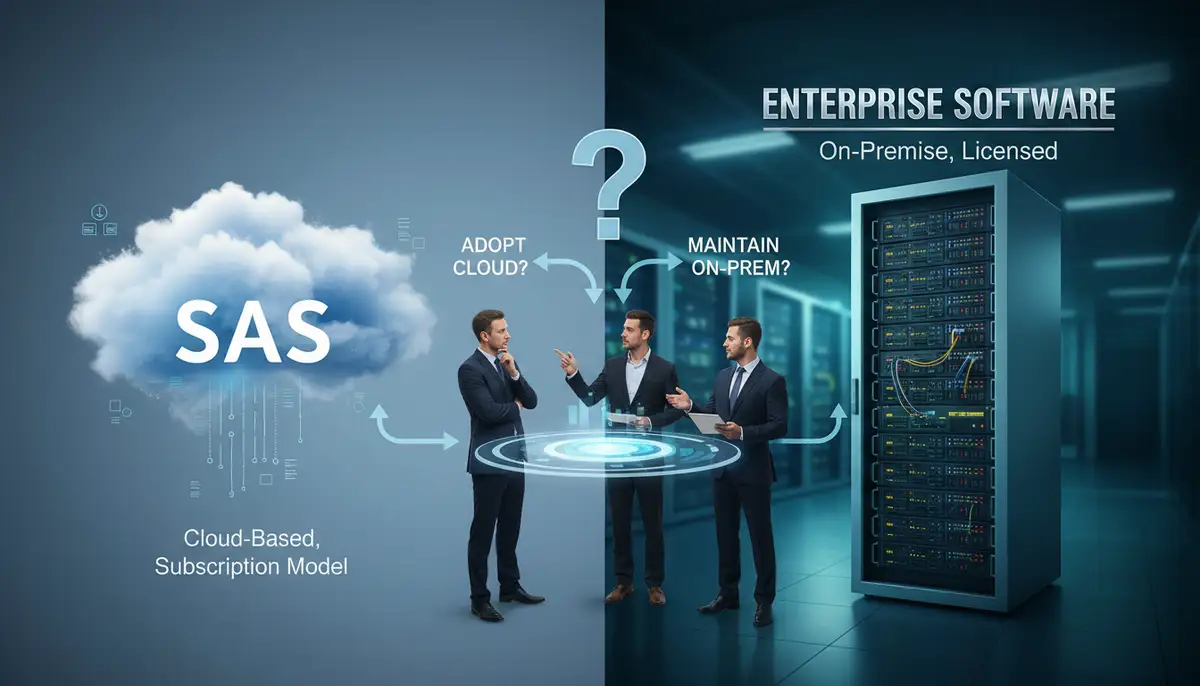
SaaS, or Software as a Service, represents a modern approach to software delivery. Instead of purchasing and installing software on your own servers, you access it over the internet. A third-party provider hosts and maintains the application, making it available to users on a subscription basis. Think of it like renting software rather than owning it outright. This model has gained immense popularity due to its flexibility and accessibility.
Key characteristics of SaaS include cloud-based deployment, meaning the software and data reside in the provider’s data centers. Users typically pay a recurring fee, often monthly or annually, to use the service. Updates, maintenance, and security patches are all handled by the vendor, reducing the burden on your internal IT team. This shared responsibility model is a significant part of the difference between SaaS and enterprise software.
Benefits of SaaS Solutions
- Lower Upfront Costs: No large initial investment in licenses or infrastructure. You pay as you go.
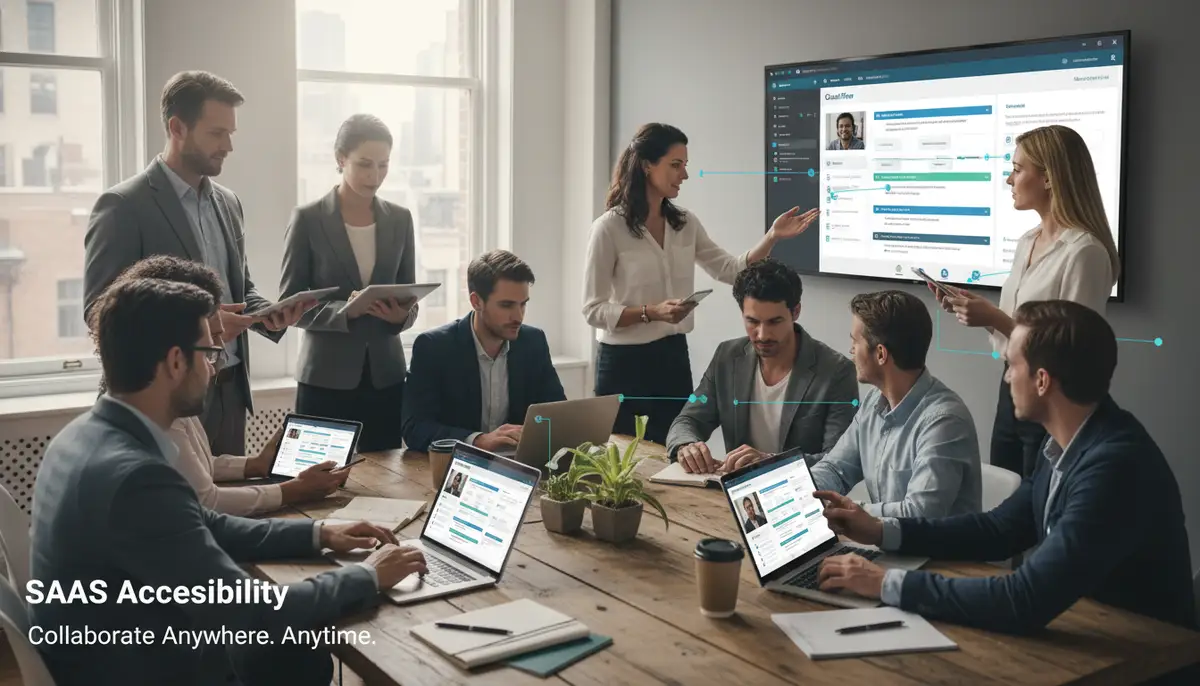
- Accessibility: Access the software from anywhere, anytime, on any device with an internet connection.
- Scalability: Easily scale up or down based on your business needs without hardware upgrades.
- Maintenance-Free: The vendor handles all infrastructure, updates, and security, freeing up your IT resources.
- Faster Deployment: Get up and running quickly, often within days or weeks.
- Automatic Updates: Always have the latest features and security enhancements without manual effort.
Drawbacks of SaaS Solutions
- Limited Customization: While many SaaS platforms offer configuration options, deep customization can be restricted.
- Vendor Lock-in: Migrating data to another platform can be challenging if you decide to switch providers.
- Internet Dependency: A reliable internet connection is crucial for continuous access and performance.
- Data Security Concerns: You rely on the vendor’s security measures, which might not always align with your specific compliance needs.
- Integration Challenges: Integrating with highly specialized legacy systems can sometimes be complex.
Many businesses find SaaS appealing for its operational simplicity and predictable costs. For example, a cloud based hrms software can offer immediate benefits without heavy IT investment. However, understanding these trade-offs is crucial when evaluating the difference between SaaS and enterprise software.
Understanding Enterprise Software: On-Premise & Custom Solutions
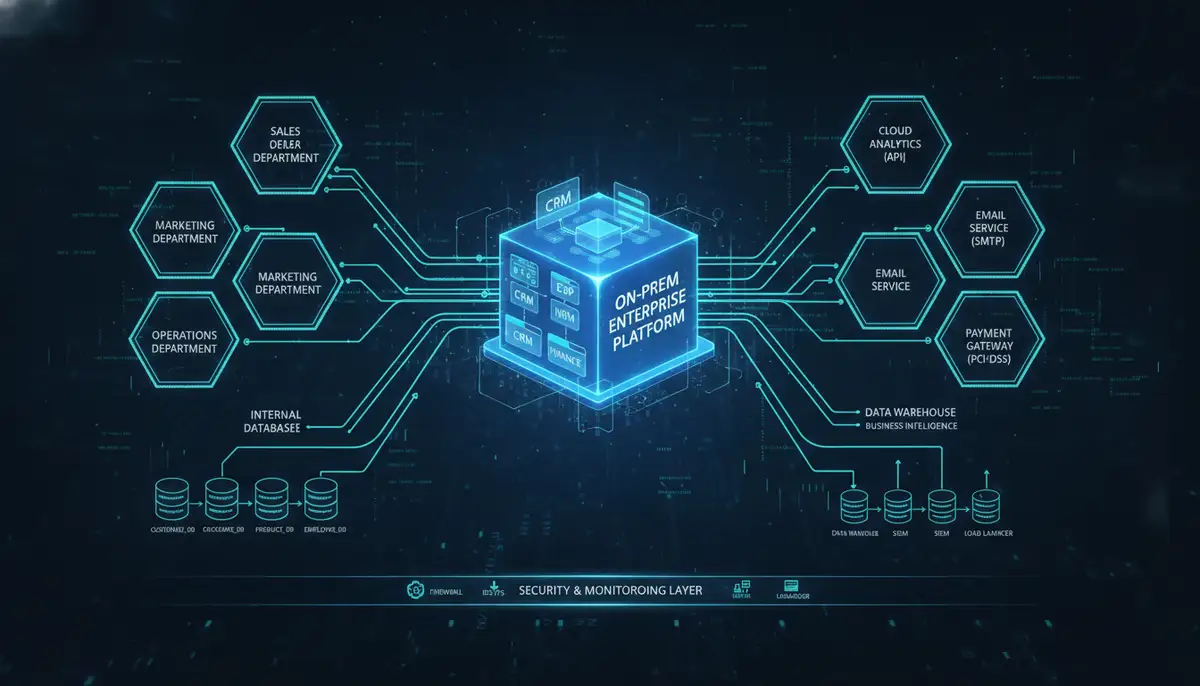
Enterprise software, traditionally, refers to applications installed and run on a company’s own servers and infrastructure. Your organization buys the software license and takes full responsibility for its hosting, maintenance, and security. This model gives you complete control over your software environment. It is often chosen by larger organizations with unique, complex requirements or strict regulatory compliance needs. Tatvasoft explains that enterprise software is software that the company purchases and runs on its computers.
This type of software is typically developed or heavily customized to meet specific business processes. It might involve a significant upfront investment in licenses, hardware, and implementation services. The ongoing costs include IT staff salaries, server maintenance, power, cooling, and potential upgrade fees. This ‘ownership’ model is a stark contrast to the ‘rental’ model of SaaS, highlighting a key difference between SaaS and enterprise software.
Benefits of Enterprise Software
- Full Customization: Tailor the software precisely to your unique business processes and workflows.
- Complete Data Control: Your data resides on your servers, giving you absolute control over security, privacy, and compliance.
- Deep Integration: Easier integration with existing legacy systems and internal databases.
- No Internet Dependency: Operates within your internal network, reducing reliance on external internet connectivity.
- Long-term Cost Efficiency (Potentially): After the initial investment, ongoing costs might be lower for very specific long-term use cases, though this requires careful TCO analysis.
Drawbacks of Enterprise Software
- High Upfront Costs: Significant investment in licenses, hardware, and implementation resources.
- Maintenance Burden: Requires dedicated IT staff for installation, maintenance, updates, and troubleshooting.
- Slower Deployment: Implementation can take months or even years due to complexity and customization.
- Scalability Challenges: Scaling requires additional hardware purchases and IT effort, which can be costly and time-consuming.
- Risk of Obsolescence: You are responsible for keeping the software and hardware up-to-date.
The choice often comes down to control versus convenience. For organizations with highly specialized operations, the ability to fully customize their software can be a game-changer. However, this comes with a significant commitment of resources. This forms a major part of the difference between SaaS and enterprise software.
The Core Difference Between SaaS and Enterprise Software: A Direct Comparison
The fundamental difference between SaaS and enterprise software lies in their deployment, ownership, and operational models. SaaS offers a subscription-based, cloud-hosted service, while enterprise software typically involves purchasing licenses and hosting the solution on your own infrastructure. This distinction drives many subsequent differences in cost, control, and flexibility.
Hubifi highlights that enterprise software is usually accessible only within a company’s network, while SaaS can be accessed from anywhere with an internet connection. This accessibility factor is a prime example of the operational divergence. Let’s break down the key comparison points to fully grasp the difference between SaaS and enterprise software.
| Feature | SaaS (Software as a Service) | Enterprise Software (On-Premise) |
|---|---|---|
| Deployment | Cloud-hosted by vendor | Hosted on company’s servers |
| Ownership Model | Subscription (renting) | License purchase (owning) |
| Cost Structure | OpEx (Operating Expense), recurring fees | CapEx (Capital Expense), large upfront cost + OpEx |
| Maintenance & Updates | Handled by vendor | Managed by internal IT team |
| Accessibility | Anywhere with internet | Typically within company network |
| Customization | Configurable, limited deep customization | Highly customizable, tailored solutions |
| Scalability | Easily scalable by vendor | Requires hardware upgrades, IT effort |
| Data Control | Shared responsibility with vendor | Full control by company |
| Deployment Time | Fast (days to weeks) | Slow (months to years) |
Understanding these distinctions is crucial for making an informed decision. The video below provides further insights into these differences, helping you visualize the implications for your business:
Key Considerations When Choosing Your Software Solution
Your choice between SaaS and enterprise software should align with your business strategy. There isn’t a universally ‘better’ option. The optimal solution depends on your specific operational needs, budget constraints, and long-term vision. Here are critical factors to consider, helping you evaluate the true difference between SaaS and enterprise software in your context.
Cost Structure and Budget
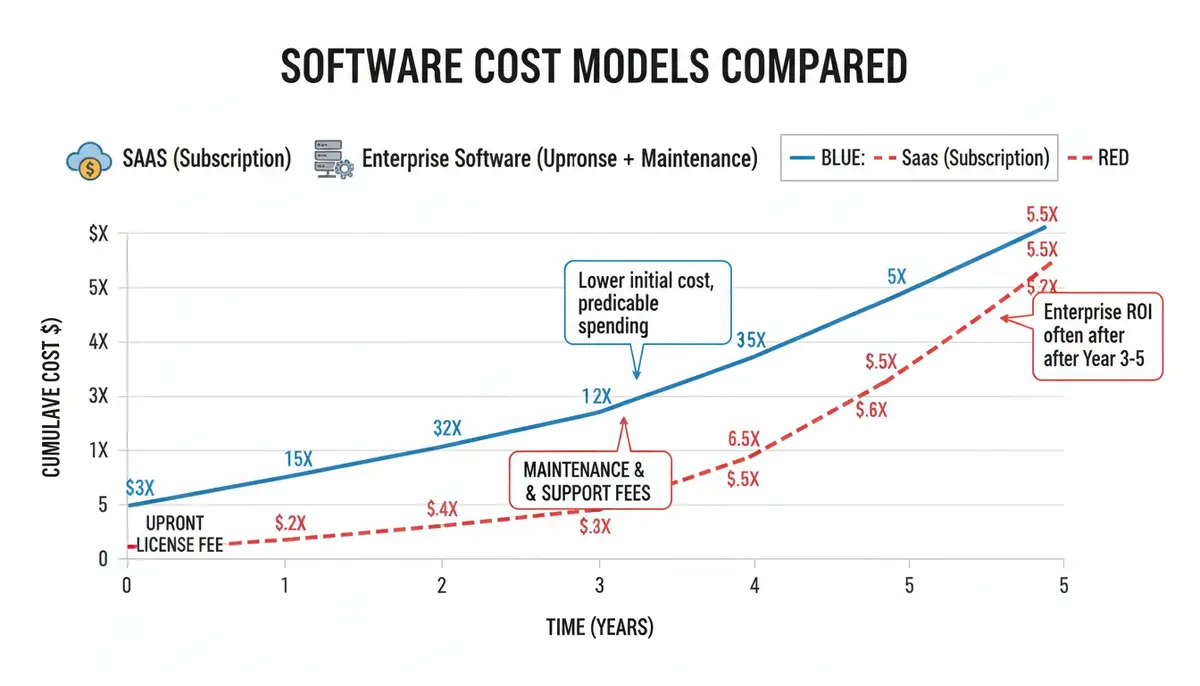
Evaluate the total cost of ownership (TCO) over several years, not just the initial price tag. SaaS involves predictable operational expenses (OpEx) with subscription fees. Enterprise software requires significant capital expenditure (CapEx) upfront for licenses and infrastructure, plus ongoing OpEx for maintenance and IT staff. Consider how each model impacts your cash flow and financial planning. Sometimes, the ‘cheapest HRMS software’ might have hidden costs if it does not fit your operational model, as discussed in our article Beyond the Price Tag: Why the ‘Cheapest HRMS Software’ Isn’t Always Your Best Bet.
Customization and Flexibility
How unique are your business processes? If you have highly specialized workflows that provide a competitive advantage, enterprise software offers unparalleled customization. SaaS solutions provide configuration options but might limit deep, code-level modifications. Odoo, for instance, offers a flexible platform that can be deployed both as SaaS (Odoo Online) and on-premise (Odoo Enterprise), allowing varying degrees of customization.
Data Security and Compliance
Data control is a major differentiator. With enterprise software, your data resides entirely within your firewall, giving you maximum control. SaaS requires trusting your vendor’s security protocols and compliance certifications. For industries with stringent regulatory requirements (e.g., healthcare, finance), this can be a critical factor. Effective Database notes that enterprise software is software your organization buys and installs on your organization’s servers. This direct control over your data is a significant part of the difference between SaaS and enterprise software.
Scalability and Growth
Consider your future growth projections. SaaS scales easily, adapting to increased user counts or data volumes with minimal effort from your side. Scaling enterprise software means investing in more hardware and IT resources. This can be a slower and more expensive process. Your ability to grow without IT bottlenecks is a key part of the difference between SaaS and enterprise software.
Integration Capabilities
How well will the new software integrate with your existing systems? SaaS platforms often provide APIs for integration but might have limitations. Enterprise software, especially custom-built solutions, can be designed for seamless integration with legacy systems. Proper integration ensures a unified data flow across your operations.
Common Misconceptions and Best Practices
Many businesses fall prey to common misconceptions when evaluating software. One prevalent error is assuming SaaS is always cheaper. While upfront costs are lower, the long-term subscription fees can sometimes exceed the TCO of an on-premise solution, especially for very large, stable organizations. Another mistake is underestimating the need for customization. Off-the-shelf SaaS might not fit unique workflows, leading to inefficient workarounds.
Best practices involve conducting a thorough needs assessment. Document your current processes, identify pain points, and define your future requirements. Perform a comprehensive TCO analysis for both models. Engage key stakeholders from all departments. Do not rush the decision. Remember, the difference between SaaS and enterprise software is not just technical; it’s operational and strategic.
When to Involve an Odoo Consultant (Odiware’s Role)
Navigating the complexities of software selection, especially understanding the nuanced difference between SaaS and enterprise software, can be overwhelming. This is where an experienced Odoo consultant becomes invaluable. At Odiware Technologies, we specialize in Odoo ERP implementation and custom software solutions. We help businesses streamline operations and enhance productivity by choosing and deploying the right Odoo version.
An Odoo consultant can help you:
- Assess your specific business requirements and map them to Odoo’s capabilities.
- Conduct a detailed TCO analysis for Odoo Online (SaaS) versus Odoo Enterprise (on-premise or private cloud).
- Design a tailored Odoo implementation strategy that maximizes ROI.
- Ensure seamless integration with your existing systems.
- Provide expert guidance on data migration, security, and compliance.
- Offer ongoing support and optimization post-implementation.
While companies like ksolves.com, serpentcs.com, and o2btechnologies.com also offer Odoo services, Odiware focuses on a partnership approach. We ensure your Odoo solution perfectly aligns with your strategic goals, whether you lean towards the agility of SaaS or the deep control of enterprise software. Our expertise bridges the gap between Odoo’s powerful features and your unique business context.
Real-World Scenarios: Making the Right Choice with Odoo
Let’s consider two practical scenarios to illustrate the difference between SaaS and enterprise software in action, particularly with Odoo’s versatile platform.
Scenario 1: A Growing SME Needing Rapid Deployment
A mid-sized e-commerce company experiences rapid growth. They need to quickly implement an integrated ERP system to manage sales, inventory, and accounting. Their IT resources are limited. For them, Odoo Online (SaaS) would be an ideal fit. They benefit from quick deployment, automatic updates, and minimal IT overhead. The subscription model fits their operational budget, and Odoo’s extensive standard features meet most of their needs without extensive customization. This is a clear case where the SaaS model’s advantages shine.
Scenario 2: A Large Manufacturing Enterprise with Unique Processes
A large manufacturing firm has highly specialized production lines and complex supply chain management processes. They require deep integration with proprietary machinery and strict data governance. For this company, an on-premise Odoo Enterprise implementation is likely the better choice. It allows for extensive customization of Odoo modules to match their unique manufacturing workflows. They maintain full control over their data, and their dedicated IT team can manage the infrastructure. This scenario exemplifies where the control and customization of enterprise software outweigh the simplicity of SaaS.
Odoo’s flexibility allows businesses to choose the deployment model that best suits their needs, effectively bridging the gap between SaaS and traditional enterprise software. Our role at Odiware is to help you navigate these choices, ensuring your Odoo implementation delivers maximum value.
FAQs on SaaS vs. Enterprise Software
- Q: Is SaaS always cheaper than enterprise software? A: Not necessarily. While initial costs are lower for SaaS, long-term TCO depends on factors like user count, subscription duration, and specific features. Enterprise software has higher upfront costs but might be more cost-effective over a very long period for specific use cases.
- Q: Can I customize SaaS applications? A: Most SaaS applications offer configuration options and integrations. However, deep, code-level customization is usually limited compared to on-premise enterprise software. Odoo SaaS provides extensive configuration but full code access is for on-premise.
- Q: What about data security in SaaS? A: SaaS providers invest heavily in security, often more than individual companies. However, you are relying on their infrastructure. Enterprise software gives you direct control over your data security measures.
- Q: Which option is better for a small business? A: Generally, SaaS is better for small businesses due to lower upfront costs, faster deployment, and reduced IT burden. It offers scalability as the business grows.
- Q: Does Odoo offer both SaaS and enterprise options? A: Yes, Odoo offers Odoo Online (SaaS) and Odoo Enterprise, which can be deployed on-premise or on a private cloud. This flexibility is a key advantage of Odoo, allowing businesses to choose the model that best fits their needs, illustrating the practical difference between SaaS and enterprise software.
Conclusion: Making an Informed Decision for Your Future
The decision between SaaS and enterprise software is a strategic one, shaping your operational efficiency and competitive edge. It’s not about choosing a ‘winner’ but selecting the model that aligns perfectly with your business goals, resources, and risk tolerance. We’ve explored the critical difference between SaaS and enterprise software, from deployment and cost to customization and control.
As technology continues to evolve, understanding these distinctions becomes even more vital. Whether you prioritize agility and lower upfront costs with SaaS, or seek ultimate control and deep customization with enterprise software, a well-informed decision is your best asset. If you are considering Odoo or need expert guidance to navigate these complex choices, we invite you to reach out. Our team at Odiware is ready to partner with you. Contact us to discuss how we can help optimize your software strategy and drive business success.