


Mastering Your Business: The Critical Difference Between Production Management and Operation Management
In today’s fast-paced business world, understanding your core functions is vital. Many business leaders often use terms like ‘production management’ and ‘operations management’ interchangeably. However, there is a significant and strategic difference between production management and operation management. Recognizing this distinction is not just an academic exercise; it directly impacts your business’s efficiency, profitability, and ability to adapt. As Odoo consultants, we frequently guide clients through this precise challenge, ensuring their systems align with their true business needs.
This article will clarify the fundamental difference between production management and operation management. We will explore their unique scopes, objectives, and how they contribute to overall business success. More importantly, we will discuss why this understanding is crucial for effective ERP implementation, especially with a comprehensive system like Odoo. You will gain insights into optimizing your processes and making informed strategic decisions.
Understanding Production Management: The Engine of Goods Creation
Production management focuses specifically on the processes involved in creating tangible goods. Think of it as the engine room of a manufacturing business. Its primary goal is to ensure that goods are produced efficiently, cost-effectively, and meet quality standards. This discipline is all about transforming raw materials into finished products.
Key aspects of production management include planning, organizing, directing, and controlling the production process. This involves everything from factory layout and equipment maintenance to inventory control for raw materials and work-in-progress. The ultimate aim is to maximize output while minimizing waste and production costs. For a deeper dive into how this impacts manufacturing, you can read more about production management’s role in creating goods.
Core Activities of Production Management
- Product Design and Development: Creating the specifications for new products.
- Process Planning and Design: Determining the best methods and sequences for production.
- Facility Layout and Location: Optimizing the physical arrangement of machines and workstations.
- Production Planning and Control: Scheduling production, managing capacity, and monitoring progress.
- Inventory Management: Overseeing raw materials, work-in-progress, and finished goods.
- Quality Control: Ensuring products meet predefined standards and specifications.
- Maintenance Management: Keeping machinery and equipment in optimal working condition.
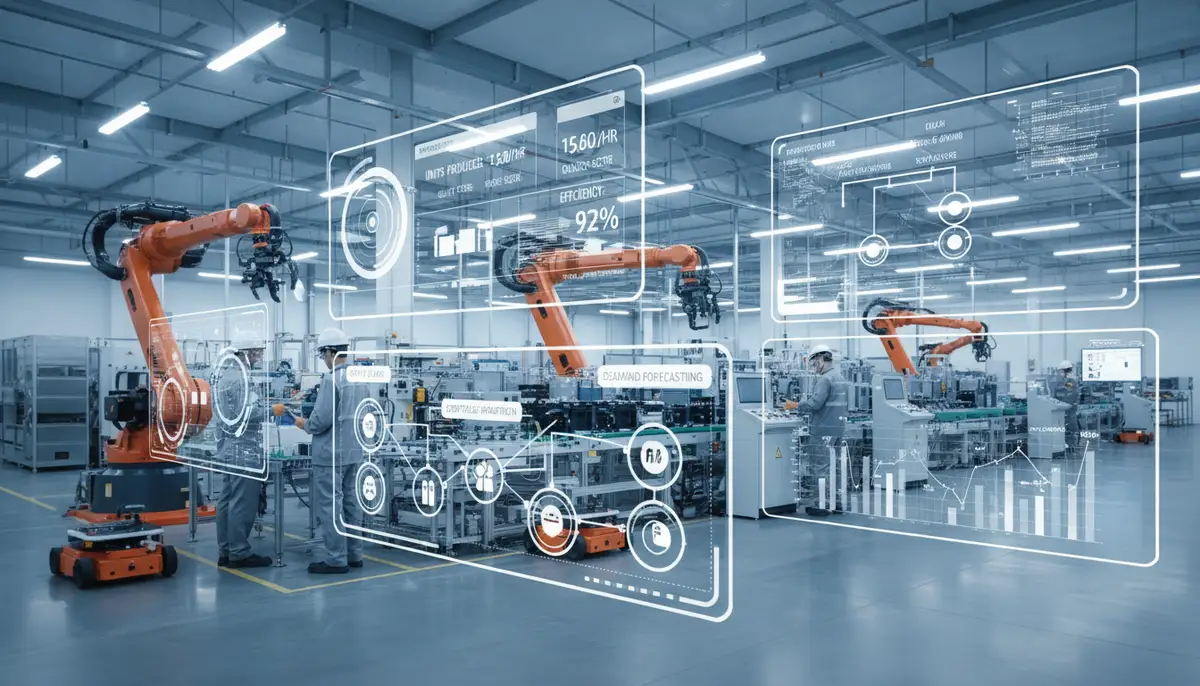
Consider a car manufacturing plant. Production management oversees the assembly line, manages the supply of parts, ensures robots and human workers are efficient, and maintains the machinery. It’s about the physical creation of the car itself. This hands-on, product-centric approach defines the essence of production management.
Exploring Operations Management: The Holistic Business View
Operations management, on the other hand, takes a much broader perspective. It encompasses all activities involved in creating and delivering both goods and services. While production management is a subset, operations management oversees the entire value chain of a business. It focuses on converting inputs into outputs across the entire organization.
The goal of operations management is to optimize all business processes to meet customer demands effectively and efficiently. This includes managing resources, improving processes, and ensuring smooth delivery. It’s about the strategic direction and daily execution of all activities that create value for customers. This broad scope is a key aspect of the difference between production management and operation management.
Core Activities of Operations Management
- Service Design and Delivery: Developing and implementing service offerings.
- Supply Chain Management: Overseeing the flow of goods, services, and information from origin to consumption.
- Logistics and Distribution: Managing the movement and storage of products.
- Customer Relationship Management (CRM): Handling customer interactions and service.
- Process Improvement: Continuously enhancing efficiency and effectiveness across all operations.
- Resource Management: Optimizing the use of human, financial, and technological resources.
- Quality Assurance: Ensuring consistent quality in both products and services.
Think about an e-commerce company. Operations management not only handles the warehousing and shipping of products (which might involve some production management principles for custom packaging) but also manages the website’s uptime, customer service, payment processing, and returns. It’s the overarching system that ensures the entire customer journey is seamless. This holistic view is a crucial part of the difference between production management and operation management. For more insights on this broad scope, consider this overview of operations management.
The Core Difference Between Production Management and Operation Management
Now that we have defined each, let’s explicitly outline the core difference between production management and operation management. The simplest way to frame it is that production management is a specialized function within the broader discipline of operations management. Operations management is the umbrella term, covering a wider array of activities that create value, including those focused on services.
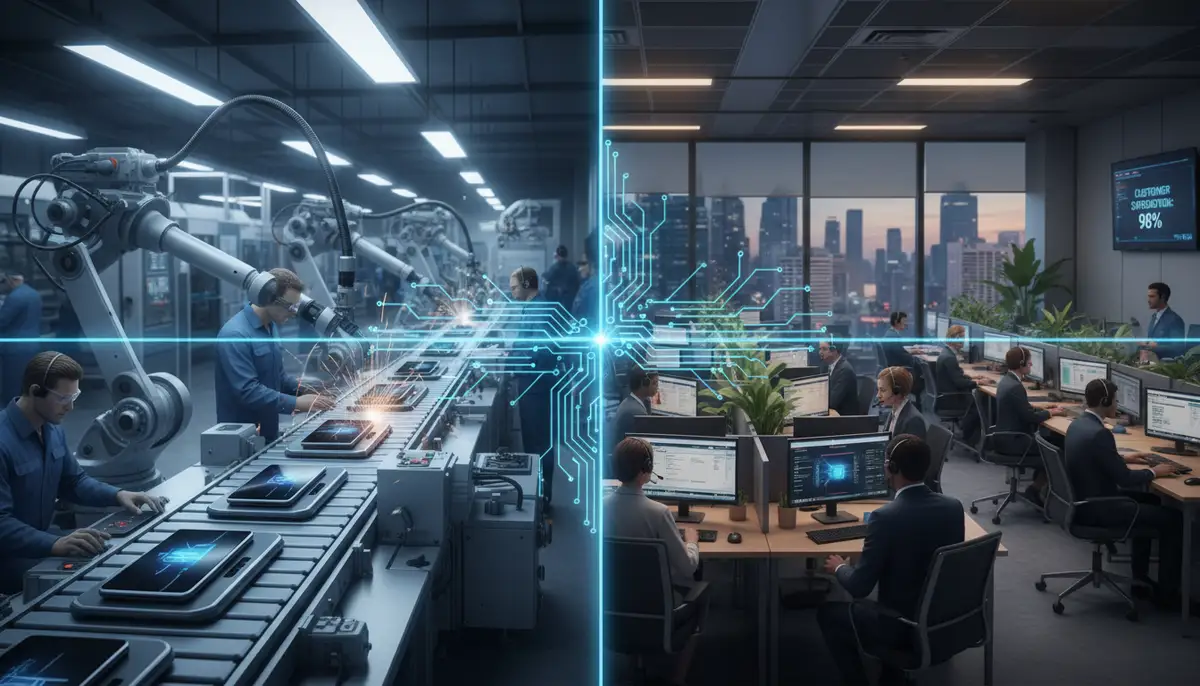
Production management is primarily concerned with the transformation of inputs into tangible goods. Operations management, however, deals with the transformation of inputs into both tangible goods and intangible services. This distinction has profound implications for how businesses structure their processes, allocate resources, and leverage technology like Odoo ERP. It’s a critical point for any business decision-maker.
| Aspect | Production Management | Operations Management |
|---|---|---|
| Primary Focus | Manufacturing tangible goods | Creating and delivering both goods and services |
| Scope | Narrow, factory-centric | Broad, organization-wide |
| Output | Tangible products | Tangible products and intangible services |
| Key Objective | Efficient production of goods | Optimizing entire value chain to meet customer needs |
| Decision Level | Tactical and operational | Strategic and operational |
| Applicability | Manufacturing industries | All industries (manufacturing, service, retail) |
Scope and Focus: A Deeper Dive
The scope is perhaps the most defining difference between production management and operation management. Production management’s scope is confined to the manufacturing floor and related activities. It optimizes the ‘making’ aspect. Its focus is on machines, materials, methods, and manpower directly involved in production.
Operations management, conversely, extends its reach across the entire organization. It considers the flow of information, customer interactions, supply chain logistics, and even post-sales support. Its focus is on the entire system that delivers value to the customer, irrespective of whether that value is a physical product or a service. This broader perspective is what makes it so critical for modern businesses.
Outputs and Value Creation: Goods vs. Services
The nature of the output is another clear differentiator. Production management’s output is always a tangible good. You can touch it, store it, and transport it. The value created is inherent in the physical product itself. Examples include cars, electronics, clothing, or processed food.
Operations management’s output can be either a tangible good or an intangible service. Services are experiences, performances, or solutions. They cannot be stored and often involve direct customer interaction. Examples include healthcare, banking, transportation, or consulting services. Even in manufacturing, operations management ensures the delivery of the product, which is a service component. This distinction is central to understanding the difference between production management and operation management. For a detailed look at this, refer to this blog on production vs. operations.
Strategic vs. Tactical Implications
Production management primarily operates at a tactical and operational level. It executes the plans to produce goods. Decisions here are about daily scheduling, machine utilization, and quality checks. These decisions are crucial for efficient manufacturing but are usually within a predefined framework.
Operations management, however, has significant strategic implications. It shapes how a company competes in the market. Decisions about supply chain design, location of service centers, or technology adoption fall under operations management. These choices impact long-term competitiveness and customer satisfaction. Understanding this strategic layer is key to grasping the full difference between production management and operation management.
Why This Difference Matters for Your Business in 2025
In 2025, businesses operate in an increasingly complex and interconnected global environment. Understanding the precise difference between production management and operation management is no longer optional; it is a strategic imperative. It allows you to optimize resource allocation, enhance customer satisfaction, and drive innovation.

Misinterpreting these roles can lead to inefficiencies, misdirected investments, and missed opportunities. For instance, focusing solely on production efficiency without considering the broader operational aspects like customer service or logistics can lead to a great product but a poor customer experience. Conversely, neglecting production efficiency in a manufacturing setting can inflate costs and erode margins. This clarity helps you build a more resilient and responsive business.
Impact on ERP Implementation (Especially Odoo)
When implementing an Enterprise Resource Planning (ERP) system like Odoo, a clear understanding of the difference between production management and operation management becomes critical. Odoo offers a vast array of integrated modules. Knowing which modules to prioritize and how to configure them depends entirely on your business’s core activities and strategic goals.
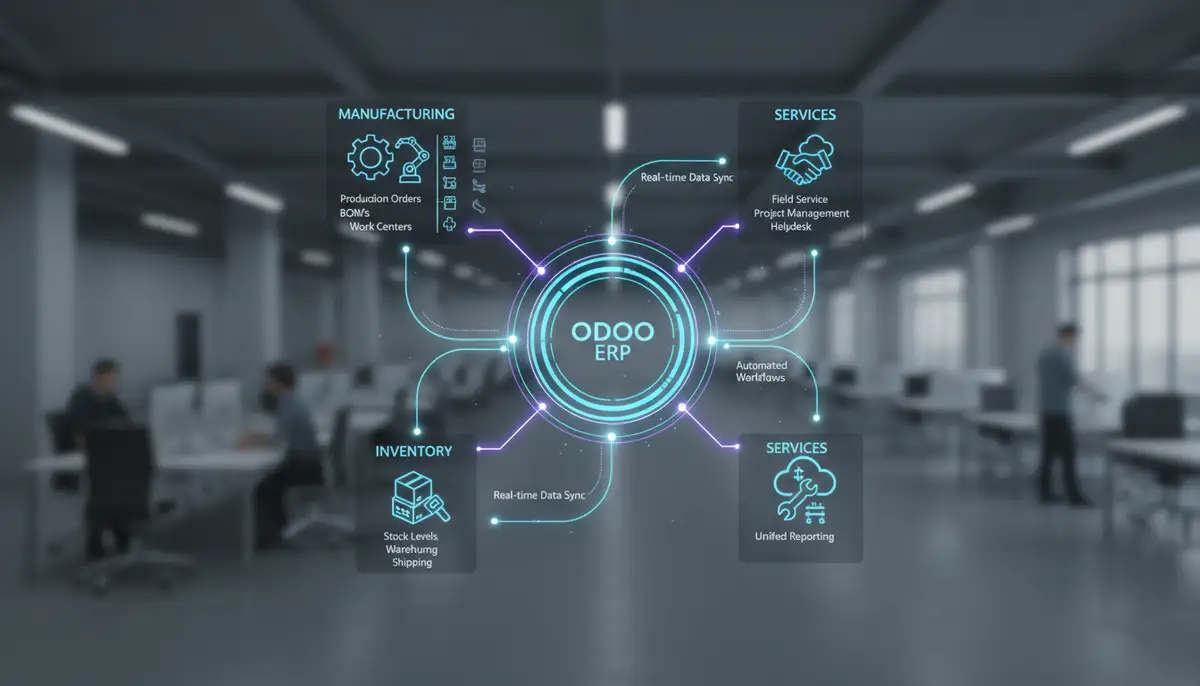
For a manufacturing company, Odoo’s Manufacturing (MRP) module, Inventory, and Quality Management modules directly support production management. These tools help optimize factory operations, track work orders, and manage bills of materials. However, to truly leverage Odoo, you also need to consider the broader operations.
Odoo’s Sales, CRM, Purchase, Project, Field Service, and Accounting modules are essential for operations management. They manage the entire customer journey, supply chain, and service delivery. Integrating these modules ensures a seamless flow of information and processes across your organization. For example, understanding the benefits of Odoo highlights how it unifies these disparate functions.
Odiware Technologies specializes in tailoring Odoo ERP solutions. We ensure your Odoo implementation accurately reflects your operational structure, whether your focus is primarily production, service delivery, or a hybrid model. Our expertise helps you avoid common pitfalls and maximize your ERP investment.
Common Misconceptions and Best Practices
Despite the clear definitions, several misconceptions persist regarding the difference between production management and operation management. Addressing these can help you avoid strategic errors and optimize your business processes more effectively.
Misconception 1: They Are Interchangeable
Many believe these terms are synonyms. This is incorrect. As we’ve established, production management is a specific function of creating goods. Operations management is a broader, strategic function that encompasses all value-adding activities, including production. Confusing them can lead to a narrow focus when a holistic view is needed.
Misconception 2: Operations Management is Only for Service Businesses
While operations management is crucial for service businesses, it is equally vital for manufacturing companies. A manufacturing firm not only produces goods but also manages its supply chain, logistics, customer service, and distribution. All these fall under operations management. A successful manufacturing company needs robust operations management to deliver its products effectively to the market.
Best Practice: Integrated Planning and Execution
The best approach is to view production management and operations management as interconnected components of a larger system. They should not operate in silos. Integrated planning ensures that production schedules align with market demand, supply chain capabilities, and customer delivery expectations. This synergy drives overall business efficiency.
Leveraging an integrated ERP system like Odoo facilitates this integration. It provides a single source of truth for all data, from raw material procurement to final product delivery and customer feedback. This allows for real-time adjustments and better decision-making across all operational aspects. For instance, effective asset management in Odoo can significantly boost both production and overall operational efficiency.
When to Involve an Odoo Consultant
Understanding the difference between production management and operation management is the first step. Implementing systems and strategies to optimize both is the next, more complex challenge. This is where an experienced Odoo consultant becomes invaluable. You might consider professional guidance if you are:
- Struggling with inefficient processes across your value chain.
- Planning a new Odoo ERP implementation or upgrading an existing one.
- Experiencing disconnects between your manufacturing floor and other business functions.
- Looking to scale your operations but lack a clear strategic roadmap.
- Needing to integrate complex supply chain or service delivery models.
- Seeking to leverage advanced Odoo features for automation and reporting.
Odiware Technologies helps businesses like yours navigate these complexities. We provide tailored Odoo ERP consulting services, ensuring your system is configured to support both your production management needs and your broader operations management objectives. While companies like serpentcs.com, odooimplementers.com, and cybrosys.com also offer Odoo services, Odiware’s focus is on delivering solutions that provide clear business impact and long-term value.
Our consultants bring deep industry knowledge and Odoo expertise. We help you map your unique business processes to Odoo’s capabilities, identify areas for improvement, and implement solutions that drive tangible results. We act as your strategic partner, not just a software vendor.
Frequently Asked Questions (FAQs)
Is Production Management a subset of Operations Management?
Yes, absolutely. Production management is a specialized function that falls under the broader umbrella of operations management. Operations management encompasses all activities that convert inputs into outputs, including the creation of both goods and services. Production management specifically handles the creation of tangible goods.
Can a company operate efficiently without focusing on both?
It’s highly unlikely. A manufacturing company, for example, needs strong production management to make its products. However, it also needs robust operations management to manage its supply chain, deliver products, handle customer service, and manage finances. Neglecting either will create bottlenecks and inefficiencies across the business. Understanding the difference between production management and operation management is key to balancing both effectively.
How does Odoo support both Production and Operations Management?
Odoo is designed as an all-in-one business management suite. Its Manufacturing (MRP) and Inventory modules directly support production management. For operations management, Odoo offers modules like Sales, CRM, Purchase, Accounting, Project, and Field Service. These modules integrate seamlessly, providing a unified platform to manage all aspects of your business, from raw materials to customer delivery and support. This integration helps bridge the difference between production management and operation management by providing a holistic view.
What are the common challenges in differentiating these two areas?
The main challenge stems from their overlapping nature, especially in manufacturing. Both aim for efficiency and quality. However, the scope of operations management is much wider, including service delivery and strategic resource allocation. Production management focuses intensely on the ‘how’ of making goods. Clearly defining responsibilities and processes helps mitigate this confusion.
Conclusion: Strategic Clarity for Business Success
The difference between production management and operation management is more than just semantics. It represents a fundamental distinction in scope, objectives, and strategic impact within your organization. Production management is the art and science of creating tangible goods efficiently. Operations management is the overarching discipline that ensures all value-creating activities, both goods and services, run smoothly and strategically.
For any business aiming for sustainable growth and efficiency in 2025, a clear understanding and effective implementation of both are non-negotiable. Leveraging a powerful ERP system like Odoo, correctly configured to your specific needs, is paramount. Odiware Technologies stands ready to partner with you, ensuring your Odoo implementation not only understands but also expertly manages the intricate relationship between production and operations.
Don’t let confusion hinder your business potential. Gain clarity and drive efficiency. Start Free Trial to explore how Odoo can transform your operations, or connect with our experts for a personalized consultation on optimizing your production and operations management strategies.


