Why the Best Sales Management Software is Critical for Your Business in 2025
In today’s fast-paced market, effective sales management is not just an advantage; it is a necessity. Businesses must equip their sales teams with the right tools to stay competitive. Choosing the best sales management software can transform your sales operations. It moves you from reactive selling to proactive, data-driven strategies. This shift helps you understand customer needs better and close deals faster. Without a robust system, your sales efforts can become fragmented and inefficient. This article explores how to select the best sales management software for your organization.
Many companies struggle with managing their sales pipeline. They often miss opportunities or fail to track customer interactions effectively. This leads to lost revenue and frustrated sales teams. The right software provides a centralized hub for all sales activities. It offers clear visibility into performance and identifies areas for improvement. Our experience at Odiware Technologies shows that a well-implemented solution makes a significant difference. It empowers your team to focus on selling, not administrative tasks.
What Exactly is Sales Management Software?
Sales management software is a digital platform designed to streamline and optimize every aspect of your sales process. It helps managers oversee sales activities, track performance, and forecast revenue. For sales representatives, it automates routine tasks and provides essential customer information. This software acts as a central nervous system for your sales department. It ensures everyone works with the latest data and follows consistent processes.
Think of it as an intelligent assistant for your entire sales force. It manages leads, tracks opportunities, and records customer interactions. The goal is to improve efficiency and boost sales figures. Finding the best sales management software means choosing a tool that aligns with your unique business goals. It should support your sales methodology and integrate seamlessly with other business systems. For instance, many solutions offer comprehensive CRM functionalities, as highlighted by HubSpot’s free CRM powers your customer support, sales, and marketing.
Key Features to Look for in the Best Sales Management Software
When evaluating options for the best sales management software, certain features are non-negotiable. These functionalities ensure that the software genuinely adds value. They help your team perform at its peak. Prioritizing these features will guide you towards a solution that truly meets your needs.
Lead and Opportunity Management
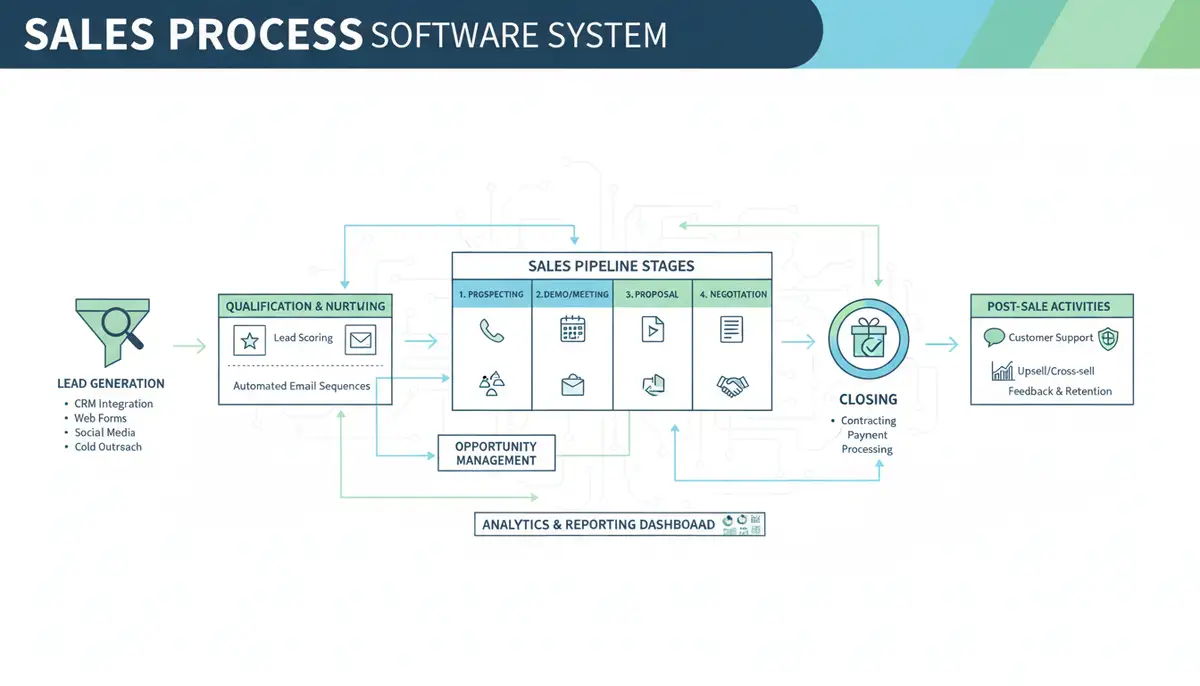
This is fundamental. The best sales management software provides robust tools for tracking leads from initial contact to conversion. It should allow you to qualify leads, assign them to reps, and monitor their progress. Opportunity management involves visualizing your sales pipeline. This means moving deals through various stages. It offers clear insights into potential revenue and where deals might be stalling.
- Automated lead capture from various sources (website forms, emails)
- Lead scoring to prioritize high-potential prospects
- Customizable sales pipelines to match your unique process
- Drag-and-drop functionality for easy opportunity stage updates
- Detailed history of all interactions for each lead and opportunity
Sales Forecasting and Reporting
Accurate forecasting is crucial for strategic planning. The best sales management software offers advanced analytics and reporting capabilities. It helps you predict future sales based on historical data and current pipeline activity. Customizable dashboards provide real-time insights into individual and team performance. This allows managers to make informed decisions quickly. It also helps identify trends and potential issues before they escalate.
Automation of Sales Tasks
Manual tasks consume valuable selling time. The best sales management software automates repetitive activities. This includes email sequences, task assignments, and data entry. Automation frees up your sales team to focus on building relationships and closing deals. It also reduces human error, ensuring consistency in your sales processes. This efficiency boost directly contributes to higher productivity and better sales outcomes.
- Automated email templates and scheduling
- Task creation and reminders for follow-ups
- Workflow automation for lead assignment and deal progression
- Automated data entry from external sources
- Integration with communication tools like email and calendar
Mobile Accessibility

Sales professionals are often on the go. The best sales management software offers robust mobile applications. These apps provide access to critical data and functionalities from anywhere. Your team can update customer records, log calls, and check pipeline status from their smartphones or tablets. This ensures that information is always current and accessible. It supports productivity whether reps are in the office or on the road.
Integration Capabilities
A standalone sales tool has limited value. The best sales management software integrates seamlessly with other business systems. This includes ERP, marketing automation, customer service, and accounting software. Such integration creates a unified view of your customer. It eliminates data silos and improves overall operational efficiency. For example, if you’re looking into expert’s guide to choosing the best ERP cloud software, you’ll find that sales integration is a key consideration.
Benefits of Implementing the Best Sales Management Software
Investing in the best sales management software yields numerous benefits. These advantages extend beyond just the sales department. They impact your entire organization. From improved customer satisfaction to enhanced strategic planning, the returns are significant. Let’s explore some key benefits.
Enhanced Sales Productivity
By automating routine tasks, sales reps gain more time for selling. They can focus on building relationships and closing deals. This directly translates to higher productivity per representative. The software also provides quick access to customer history. This helps reps tailor their approach and respond more effectively. Overall, your team becomes more efficient and impactful.
Improved Customer Relationships
A comprehensive view of customer interactions is invaluable. The best sales management software centralizes all customer data. This includes past purchases, communication history, and preferences. Armed with this information, your sales team can offer personalized experiences. They can anticipate needs and address concerns proactively. This level of personalized service builds stronger customer loyalty and satisfaction.
Better Decision-Making with Data
Data is power. The best sales management software provides robust analytics and reporting. It gives managers deep insights into sales performance. You can identify top performers, pinpoint bottlenecks, and understand what strategies work best. This data-driven approach allows for more informed decision-making. It ensures that your sales strategies are always optimized for success. You can see your sales funnel clearly and make adjustments as needed.
Accurate Sales Forecasting
Precise sales forecasts are critical for resource allocation and business planning. The software uses historical data and current pipeline status to generate reliable predictions. This helps you manage inventory, plan marketing campaigns, and set realistic goals. Accurate forecasting minimizes risks and maximizes opportunities. It gives your business a clearer path forward.
Odoo as a Leading Sales Management Solution
At Odiware Technologies, we frequently recommend Odoo as the best sales management software for many businesses. Odoo offers a comprehensive suite of integrated business applications. Its sales module is powerful, flexible, and seamlessly connected with other Odoo apps. This includes CRM, accounting, inventory, and project management. This integration is where Odoo truly shines.
Odoo’s sales module provides end-to-end sales process management. It covers everything from lead generation and quotation management to order processing and invoicing. Its intuitive interface and customizable dashboards make it easy for sales teams to adopt. Furthermore, Odoo’s open-source nature allows for extensive customization. This means it can be tailored to fit your specific business needs perfectly. This flexibility is a key differentiator when seeking the best sales management software.
For a deeper dive into how integrated solutions like Odoo can benefit your overall business, consider exploring an expert perspective on the best accounting software for ecommerce business. The synergy between sales and accounting is crucial for financial health.
Common Mistakes When Implementing Sales Management Software
Even the best sales management software can fail if implemented incorrectly. We have seen common pitfalls across many businesses. Avoiding these mistakes is crucial for a successful deployment and user adoption. Proper planning and execution are key.
Lack of User Adoption
The most common issue is resistance from sales teams. If reps don’t see the value or find the system too complex, they won’t use it. This renders the investment useless. Proper training, clear communication of benefits, and involving users in the selection process are vital. The best sales management software is only effective if your team actually uses it.
Poor Data Migration
Migrating existing customer and sales data can be complex. Errors during this phase lead to inaccurate records and lost information. This undermines trust in the new system. A meticulous data migration strategy is essential. It requires careful planning and validation to ensure data integrity.
Ignoring Integration Needs
Many businesses overlook the importance of integrating sales software with other systems. This creates data silos and manual data transfers. It defeats the purpose of an all-in-one solution. Ensure your chosen best sales management software connects seamlessly with your existing ERP, accounting, and marketing tools. This creates a unified data ecosystem.
When to Involve an Odoo Consultant
While choosing the best sales management software, businesses often face unique challenges. These can range from complex customization requirements to integrating with legacy systems. This is where an experienced Odoo consultant becomes invaluable. They offer expert guidance and ensure a smooth implementation. Odiware Technologies specializes in Odoo ERP implementation and custom software solutions. We help businesses streamline operations and enhance productivity.
You should consider involving a consultant if you have specific industry needs. For example, if your sales process is highly specialized or requires unique workflows. A consultant can tailor Odoo to fit these exact requirements. They also provide comprehensive training and ongoing support. This ensures your team maximizes the software’s potential. Our goal is to move you toward strategic growth, not just software dependency.
For a visual overview of essential sales tools, you might find this video helpful:
. It covers many aspects that a good sales management system should address.
Comparing Top Sales Management Software Options
The market offers many excellent sales management software options. Each has its strengths. Beyond Odoo, other notable platforms include Salesforce Sales Cloud, HubSpot Sales Hub, and Pipedrive. Companies like cybrosys.com, o2btechnologies.com, and serpentcs.com also provide various industry solutions. Understanding their differences helps you make an informed choice for the best sales management software.
Salesforce, for example, is known for its extensive features and scalability. It suits large enterprises with complex needs. HubSpot offers a user-friendly interface and strong marketing integration. Pipedrive focuses on visual pipeline management. Odoo stands out for its comprehensive integration across all business functions. It provides a unified platform, often at a more flexible cost structure. This makes it a strong contender for businesses seeking an all-in-one ERP solution.
| Feature | Odoo Sales | Salesforce Sales Cloud | HubSpot Sales Hub |
|---|---|---|---|
| Lead & Opportunity Management | Excellent, highly customizable | Extensive, enterprise-grade | Very good, user-friendly |
| ERP Integration | Native, seamless | Via connectors/APIs | Via connectors/APIs |
| Customization | High (open-source flexibility) | High (complex) | Moderate |
| Pricing Model | Modular, scalable | Tiered, often higher for full features | Tiered, good free CRM option |
| Target Business Size | SMB to Enterprise | Mid-market to Enterprise | SMB to Mid-market |
When considering the best sales management software, look at your current ecosystem. How well will a new tool integrate? What is your budget for licensing and implementation? These practical questions guide your decision. For more insights on top tools, you can refer to resources like 9 best sales management software tools for sales teams.

Future Trends in Sales Management Software
The landscape of sales management software is constantly evolving. Staying ahead of these trends ensures your investment remains future-proof. Artificial intelligence (AI) and machine learning (ML) are becoming increasingly vital. They offer predictive analytics and personalized recommendations. This helps sales teams identify high-value leads and optimize their outreach strategies. AI-powered tools can also automate more complex tasks, such as generating sales reports or suggesting next best actions.
Another significant trend is the rise of hyper-personalization. Customers expect tailored experiences. Sales management software will increasingly leverage data to deliver highly relevant content and offers. Furthermore, the importance of robust sales performance management (SPM) tools is growing. These tools help streamline sales commission management for businesses, as discussed by Gartner reviews on sales performance management. They ensure fair compensation and motivate sales teams effectively. The best sales management software will embrace these advancements.
Frequently Asked Questions About Sales Management Software
Q: What is the primary goal of sales management software?
A: The primary goal is to optimize the entire sales process. It aims to improve efficiency, boost productivity, and increase revenue. It does this by centralizing data, automating tasks, and providing actionable insights. Ultimately, it helps sales teams sell smarter, not just harder.
Q: Can small businesses benefit from sales management software?
A: Absolutely. While often associated with larger enterprises, many solutions are scalable and affordable for small businesses. Even a small sales team can gain significant advantages. They can better manage leads, track customer interactions, and improve follow-up processes. This helps them compete more effectively.
Q: How long does it take to implement new sales management software?
A: Implementation time varies widely. It depends on the software’s complexity, your business size, and customization needs. A basic setup might take a few weeks. A comprehensive, integrated solution like Odoo could take several months. Proper planning and expert guidance, like that from Odiware Technologies, can significantly shorten this timeline.
Q: Is CRM the same as sales management software?
A: Not entirely, but they are closely related. CRM (Customer Relationship Management) software focuses on managing all customer interactions. Sales management software is a subset of CRM. It specifically targets the sales process, from lead to close. Many modern CRM systems, including Odoo, integrate robust sales management functionalities. This means they often overlap significantly.
Q: What is the most important factor when choosing the best sales management software?
A: The most important factor is alignment with your specific business needs and sales process. Consider ease of use, integration capabilities, scalability, and vendor support. A solution that fits your team’s workflow and integrates with existing systems will yield the best results. Don’t just pick the most popular option; choose the best fit.
Conclusion: Partnering for Success with the Best Sales Management Software
Selecting and implementing the best sales management software is a strategic investment. It requires careful consideration of your business’s unique requirements. The right solution can empower your sales team, improve customer relationships, and drive significant revenue growth. Odoo stands out as a highly capable and flexible option, particularly for businesses seeking an integrated ERP solution.
However, the journey from selection to successful implementation can be complex. It often benefits from expert guidance. At Odiware Technologies, we have extensive experience with Odoo implementations. We help businesses like yours navigate these challenges. We ensure your chosen sales management software truly transforms your operations. Don’t leave your sales success to chance. If you’re ready to explore how the best sales management software can elevate your business, we invite you to ‘Talk to our experts’. Let us help you unlock your full sales potential.