


Introduction: Why the Right CRM is Crucial for Marketing and Sales Success
In today’s competitive landscape, businesses need more than just good products or services. They need a cohesive strategy to attract, engage, and retain customers. This is where the best CRM for marketing and sales becomes indispensable. A robust Customer Relationship Management (CRM) system acts as the central nervous system for your customer interactions. It brings together disparate data, streamlines processes, and empowers your teams to perform at their best. For many organizations, the challenge isn’t just finding a CRM, but finding one that truly integrates marketing and sales efforts into a single, powerful platform. We often see clients struggling with fragmented tools, leading to missed opportunities and inefficient workflows. The right solution can transform your entire customer journey.
Understanding the Core Needs: What Makes the Best CRM for Marketing and Sales?
When evaluating the best CRM for marketing and sales, you need to look beyond individual features. The true value lies in how well these two critical functions are integrated. Marketing teams generate leads; sales teams convert them. If these processes are disconnected, valuable information gets lost. A unified CRM ensures a seamless handoff and a consistent customer experience. It provides a 360-degree view of every customer, from their first interaction with a marketing campaign to their latest purchase and support ticket. This holistic perspective is crucial for personalized engagement and informed decision-making. Without it, your teams work in silos, duplicating efforts and frustrating customers.
- Lead Management: Tracking leads from initial contact through qualification and assignment.
- Marketing Automation: Automating email campaigns, social media posts, and lead nurturing sequences.
- Sales Pipeline Management: Visualizing and managing the sales process, from prospect to closed deal.
- Customer Data Management: Centralizing all customer information, interactions, and history.
- Reporting and Analytics: Providing insights into marketing campaign performance and sales forecasts.
- Integration Capabilities: Connecting with other business tools like ERP, accounting, and customer service systems.
- Customization and Scalability: Adapting to unique business processes and growing with your company.
Odoo as the Best CRM for Marketing and Sales: An Integrated Powerhouse
Among the many options available, Odoo stands out as a strong contender for the best CRM for marketing and sales. What makes Odoo unique is its modular, yet fully integrated, suite of business applications. Unlike standalone CRMs, Odoo CRM is part of a larger ERP ecosystem. This means your marketing and sales data can naturally flow into other areas like inventory, accounting, and project management. This level of integration eliminates data silos and provides unparalleled visibility across your entire organization. For businesses in 2025, this comprehensive approach is not just a luxury; it’s a necessity for operational efficiency and strategic growth. Odoo’s open-source nature also offers flexibility and a vast community, ensuring continuous improvement and adaptability.
Key Marketing Capabilities in Odoo CRM
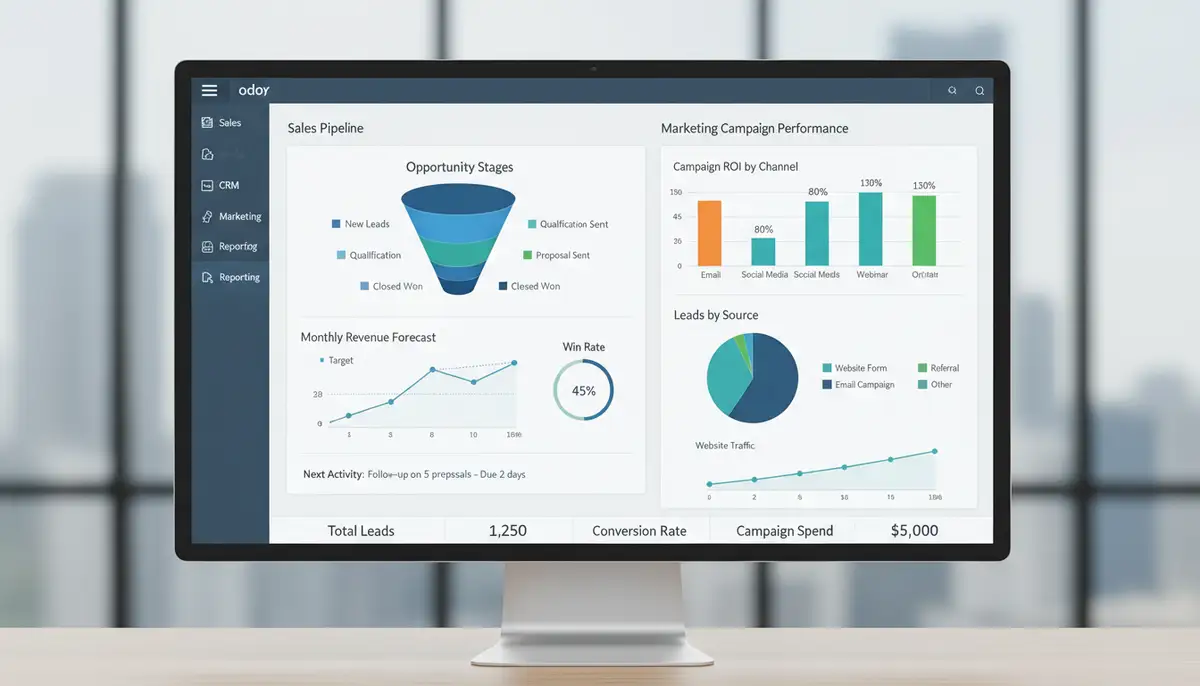
Odoo’s marketing modules are designed to empower your team from lead generation to nurturing. The platform provides tools that help you execute targeted campaigns and understand their impact. This integrated approach ensures that marketing efforts directly feed into the sales pipeline, creating a seamless journey for potential customers. It truly helps position Odoo as the best CRM for marketing and sales for many businesses.
- Email Marketing: Create professional email campaigns with drag-and-drop builders, segment your audience, and track open rates and clicks.
- Marketing Automation: Set up automated workflows to send personalized emails, assign tasks, and update lead stages based on specific triggers and customer behavior.
- Lead Nurturing: Develop drip campaigns to educate and engage leads over time, guiding them through the sales funnel.
- Website Builder & SEO: Manage your website directly within Odoo, optimizing for search engines and capturing leads with integrated forms.
- Social Marketing: Schedule and publish content across various social media platforms, tracking engagement and lead generation from these channels.
Essential Sales Features in Odoo CRM
Once marketing has generated qualified leads, Odoo CRM provides your sales team with all the tools they need to close deals efficiently. Its intuitive interface and robust features make it easy to manage the entire sales cycle. This comprehensive sales toolkit reinforces Odoo’s position as the best CRM for marketing and sales, ensuring no lead falls through the cracks and every opportunity is maximized.
- Lead Management & Scoring: Automatically capture leads from various sources, qualify them, and assign scores based on engagement and demographics. This helps sales focus on the hottest prospects.
- Sales Pipeline Visualization: Use a drag-and-drop Kanban view to visualize your sales pipeline, track opportunities, and move them through different stages. This offers clear oversight of your sales process.
- Quotation & Order Management: Generate professional quotes directly from the CRM, convert them into sales orders with a single click, and manage customer contracts.
- Activity Scheduling: Plan and track calls, meetings, emails, and other sales activities directly within the CRM, ensuring timely follow-ups.
- Reporting & Forecasting: Access real-time dashboards and reports to monitor sales performance, forecast future revenue, and identify trends.
- Customer Segmentation: Group customers based on various criteria for targeted sales efforts and personalized communication.
| Feature Category | Marketing Benefits | Sales Benefits |
|---|---|---|
| Integrated Data | Unified customer profiles, better targeting | 360-degree customer view, personalized pitches |
| Automation | Efficient campaign execution, lead nurturing | Automated follow-ups, reduced manual tasks |
| Reporting | Campaign ROI, audience insights | Sales performance, accurate forecasting |
| Customization | Tailored marketing workflows | Adaptable sales processes, unique pipelines |
Best Practices for Implementing the Best CRM for Marketing and Sales
Implementing any new system requires careful planning, especially when it’s the best CRM for marketing and sales. It’s not just about installing software; it’s about transforming how your teams work. A strategic approach ensures smooth adoption and maximizes your return on investment. We at Odiware Technologies emphasize a phased implementation, focusing on user training and data integrity. This helps avoid common pitfalls and ensures your CRM becomes a true asset. Remember, technology is only as good as the processes and people behind it.

- Define Clear Objectives: Before you start, know what you want to achieve. Are you aiming for increased lead conversion, improved customer retention, or better sales forecasting? Clear goals guide your implementation.
- Prioritize Data Hygiene: Clean and migrate your existing customer data meticulously. Bad data in means bad data out, undermining the CRM’s effectiveness.
- Focus on User Adoption: Involve your marketing and sales teams from the beginning. Provide comprehensive training and demonstrate how the CRM simplifies their daily tasks. User buy-in is paramount.
- Start Simple, Then Scale: Don’t try to implement every feature at once. Begin with essential functionalities, get them right, and then gradually introduce more advanced capabilities.
- Regular Review and Optimization: CRMs are not ‘set it and forget it’ tools. Regularly review performance, gather user feedback, and make adjustments to optimize workflows and features.
Common Mistakes to Avoid When Choosing and Implementing a CRM
Even with the intention of finding the best CRM for marketing and sales, businesses often make critical errors. These mistakes can lead to costly failures, low user adoption, and a system that doesn’t deliver on its promises. Being aware of these pitfalls can save you significant time and resources. Our experience shows that many issues stem from a lack of strategic foresight or insufficient planning. Avoiding these common errors is key to a successful CRM deployment.
- Choosing Based Solely on Features: More features don’t always mean better. Focus on what your specific business needs, not just what a CRM can do. Overly complex systems can overwhelm users.
- Neglecting User Training and Support: A powerful CRM is useless if your teams don’t know how to use it effectively. Invest in ongoing training and readily available support.
- Poor Data Migration Strategy: Rushing data migration or failing to clean existing data can introduce inaccuracies, leading to distrust in the new system.
- Ignoring Integration Needs: If your CRM doesn’t integrate with your existing ERP, accounting, or other critical systems, you’ll create new data silos instead of breaking them down. This is particularly important for those seeking the best ERP for SME or even the best ERP system for manufacturing.
When to Involve an Odoo Consulting Partner like Odiware
While Odoo’s user-friendly interface makes it accessible, complex implementations often benefit from expert guidance. When you’re looking for the best CRM for marketing and sales and considering Odoo, a specialized consulting partner can make all the difference. Odiware Technologies, for instance, brings deep expertise in Odoo ERP implementation and custom software solutions. We help businesses streamline operations and enhance productivity by tailoring Odoo to their unique needs. This includes defining requirements, customizing modules, integrating with other systems, and providing comprehensive training and support. Our goal is to ensure your Odoo CRM is not just implemented, but optimized for your specific business context. We understand the nuances of various industries and can guide you through the process, avoiding common pitfalls. Many companies, like odooimplementers.com, serpentcs.com, and o2btechnologies.com, offer Odoo services. However, Odiware focuses on delivering tailored solutions and long-term partnership.
Engaging a consultant becomes critical when you have complex business processes, require significant customization, or need to integrate Odoo with multiple existing systems. We bridge the gap between Odoo’s capabilities and your business objectives, ensuring a smooth transition and maximum ROI. Our approach is to empower your team, not create dependency. We guide you towards self-sufficiency while providing ongoing support as needed. For more information on how we approach such projects, consider exploring our Odoo implementation services. This partnership ensures your Odoo CRM becomes a strategic asset, not just another piece of software.
Real-World Impact: Odoo CRM in Action

Businesses that successfully implement Odoo as their best CRM for marketing and sales often report significant improvements. They see faster lead response times, higher conversion rates, and more effective marketing campaigns. For example, a manufacturing client integrated Odoo CRM with their production modules. This allowed their sales team to provide accurate delivery estimates in real-time, greatly improving customer satisfaction. Their marketing team could also segment customers based on purchasing history, leading to highly targeted and successful upsell campaigns. The unified data view eliminated internal disputes over customer information and fostered a collaborative environment between marketing and sales.
Another service-based company leveraged Odoo’s automation features to streamline their lead nurturing. They reduced the manual effort required for follow-ups by 40%, allowing their sales team to focus on high-value interactions. This strategic deployment of the best CRM for marketing and sales led to a 20% increase in qualified leads. The ability to track every customer touchpoint provided invaluable insights, enabling them to refine their strategies continuously. Understanding the best CRM for beginners can also be helpful, and you can learn more by watching this video:
.
Exploring Alternatives to the Best CRM for Marketing and Sales
While we champion Odoo for its integrated approach, it’s important to acknowledge that the market offers various solutions. The best CRM for marketing and sales truly depends on your specific needs, budget, and existing infrastructure. For instance, HubSpot offers a powerful CRM suite, often praised for its user-friendliness and extensive marketing automation features. Their free CRM provides a great starting point for many businesses, as detailed on their HubSpot CRM products page. Other notable players include Salesforce, Zoho CRM, and ActiveCampaign, each with their unique strengths. Forbes Advisor also provides excellent insights into the market, listing options like ActiveCampaign and Zoho CRM among the 10 Best Marketing CRMs Of 2025. Evaluating these alternatives against your requirements is a crucial step in your decision-making process. Consider factors like scalability, integration capabilities, and the level of support offered.
Frequently Asked Questions (FAQs) about the Best CRM for Marketing and Sales
- Q: What is the primary benefit of an integrated CRM for marketing and sales? A: The primary benefit is a unified view of the customer journey, enabling seamless data flow, improved collaboration, and personalized customer experiences from lead generation to post-sale support.
- Q: Can Odoo CRM integrate with my existing ERP system? A: If your ERP is also Odoo, integration is native and seamless. If it’s a different system, Odoo offers robust API capabilities to facilitate integration, often requiring expert configuration.
- Q: How long does it take to implement the best CRM for marketing and sales? A: Implementation timelines vary greatly depending on your business size, complexity, data volume, and customization needs. Simple implementations might take weeks, while complex ones can take several months. Proper planning is key.
- Q: What are the ongoing costs associated with a CRM? A: Beyond initial implementation, costs typically include subscription fees (for cloud-based solutions), maintenance, support, and potential future customizations or upgrades. Always factor in training costs as well.
- Q: Is Odoo suitable for small businesses looking for the best CRM for marketing and sales? A: Yes, Odoo’s modularity makes it highly scalable. Small businesses can start with essential CRM features and add more modules as they grow, making it a flexible and cost-effective choice.
Conclusion: Making the Right Choice for Your Business
Choosing the best CRM for marketing and sales is a strategic decision that impacts your entire organization. It’s about more than just software; it’s about building a foundation for sustainable growth and customer satisfaction. Odoo offers a compelling, integrated solution that can transform how your marketing and sales teams operate. Its comprehensive features, scalability, and seamless integration with other business functions make it a top contender for businesses looking to gain a competitive edge in 2025 and beyond. Remember, the goal is not just to manage customer relationships, but to cultivate them effectively.
At Odiware Technologies, we understand the complexities involved in selecting and implementing the right CRM. Our team of Odoo experts is ready to help you navigate this critical decision. We can assess your unique needs, recommend the optimal Odoo configuration, and ensure a smooth, successful implementation. Don’t let fragmented systems hold your business back. Partner with us to unlock the full potential of an integrated CRM solution. Contact us today to discuss how Odoo can become the best CRM for marketing and sales for your specific business goals.


