


Many businesses, especially growing ones, start their HR software journey by searching for the cheapest HRMS software. This approach is understandable. Budget constraints are real. However, focusing solely on the lowest upfront cost can lead to significant problems down the road. As an Odoo consultant at Odiware, we’ve seen this scenario play out many times. The initial savings often vanish when hidden costs, limited functionality, and scalability issues emerge.
This article will guide you through understanding the true value of HRMS solutions. We will explore why the ‘cheapest HRMS software’ might not be the most economical choice in the long run. We will also highlight how a strategic approach, often involving platforms like Odoo, can deliver superior value and performance for your organization.
The Lure of the Cheapest HRMS Software: What to Consider
The appeal of the cheapest HRMS software is powerful. Everyone wants to save money. For small businesses, every dollar counts. You might see enticing offers for basic HR functions. These often include payroll processing or simple time tracking.
However, these low-cost options often come with significant limitations. They might lack essential features. Integration with your existing systems could be difficult or impossible. Scalability is another common issue. A system that works for 10 employees might fail for 50 or 100. This is where the initial savings can quickly turn into larger expenses.
Beyond the Price Tag: Core HRMS Features You Need
Before you commit to the cheapest HRMS software, consider what your business truly needs. A robust HRMS does more than just process payroll. It streamlines your entire HR operation. This improves efficiency and employee satisfaction.
- Employee Data Management: Centralized records for all employee information, including personal details, contracts, and performance history.
- Payroll Processing: Automated calculations, tax compliance, and direct deposits. This is often a core requirement.
- Time and Attendance Tracking: Accurate recording of work hours, leaves, and absences. It helps with compliance and productivity.
- Recruitment and Onboarding: Tools to manage job applications, interviews, and new hire paperwork. This ensures a smooth start for new employees.
- Performance Management: Setting goals, conducting reviews, and tracking employee development. This fosters growth and engagement.
- Leave Management: Automated requests, approvals, and tracking of various leave types. It reduces manual errors.
- Benefits Administration: Managing health insurance, retirement plans, and other employee benefits. This can be complex without the right tools.
- Reporting and Analytics: Generating insights into HR metrics. This supports strategic decision-making.
A system that offers the bare minimum might seem like the cheapest HRMS software. However, it will likely create more manual work for your HR team. This negates any cost savings. For a comprehensive look at how these systems transform businesses, explore our article on the transformative benefits of HRMS systems.
Understanding Different HRMS Pricing Models
HRMS software pricing varies widely. Understanding these models is crucial. It helps you accurately compare options beyond just the advertised price. The ‘cheapest HRMS software’ might use a model that becomes expensive as you grow.

Common models include per-employee-per-month, tiered pricing, and module-based pricing. Some vendors also charge for implementation, training, and ongoing support. These are often overlooked costs.
| Pricing Model | Description | Potential Impact on ‘Cheapest HRMS Software’ Search |
|---|---|---|
| Per-Employee-Per-Month | You pay a fixed fee for each active employee every month. | Scales directly with headcount; can become costly for growing teams. |
| Tiered Pricing | Costs are based on employee count ranges (e.g., 1-25 employees, 26-50 employees). | Can be cost-effective for stable teams, but jumps in tiers can be expensive. |
| Module-Based Pricing | You pay for specific HR modules (e.g., payroll, recruitment, performance). | Allows customization but adding more modules increases the total cost. |
| Freemium/Basic Plans | Offers limited features for free or very low cost, with premium features requiring upgrade. | Often advertised as the ‘cheapest HRMS software’ but quickly becomes insufficient for real business needs. |
Always scrutinize what each pricing tier includes. Look for hidden fees. These might include setup charges, data migration costs, or premium support. A truly cost-effective solution considers all these factors.
Common Pitfalls When Chasing the Cheapest HRMS Software
The pursuit of the cheapest HRMS software can lead to several common mistakes. These errors can cost your business more in the long run. They impact productivity, compliance, and employee morale.
One major pitfall is a lack of scalability. A system that cannot grow with your company becomes obsolete quickly. You then face the expense and disruption of migrating to a new system. Another issue is poor customer support. When problems arise, slow or unhelpful support can paralyze your HR operations.
Integration challenges are also frequent. If your HRMS doesn’t connect with your accounting, CRM, or project management tools, data silos emerge. This leads to manual data entry and errors. This is particularly true for businesses that rely on interconnected systems for efficiency. For instance, managing sales effectively often requires seamless integration, as detailed in our guide on choosing the best sales management software.
Security and compliance are critical. The cheapest HRMS software might compromise on these vital aspects. This puts sensitive employee data at risk. It can also lead to hefty fines for non-compliance. Always ensure the software meets industry standards and local regulations.
Odoo as a Smart Alternative to the Cheapest HRMS Software
When evaluating HRMS solutions, Odoo often emerges as a compelling option. It might not always be the absolute cheapest HRMS software upfront, especially for highly customized implementations. However, its open-source nature and modular design offer exceptional long-term value and flexibility.
Odoo provides a comprehensive suite of HR modules. These include recruitment, employee management, payroll, time off, appraisals, and more. You can start with essential modules and add others as your business grows. This modularity means you only pay for what you need. It prevents overspending on unused features.
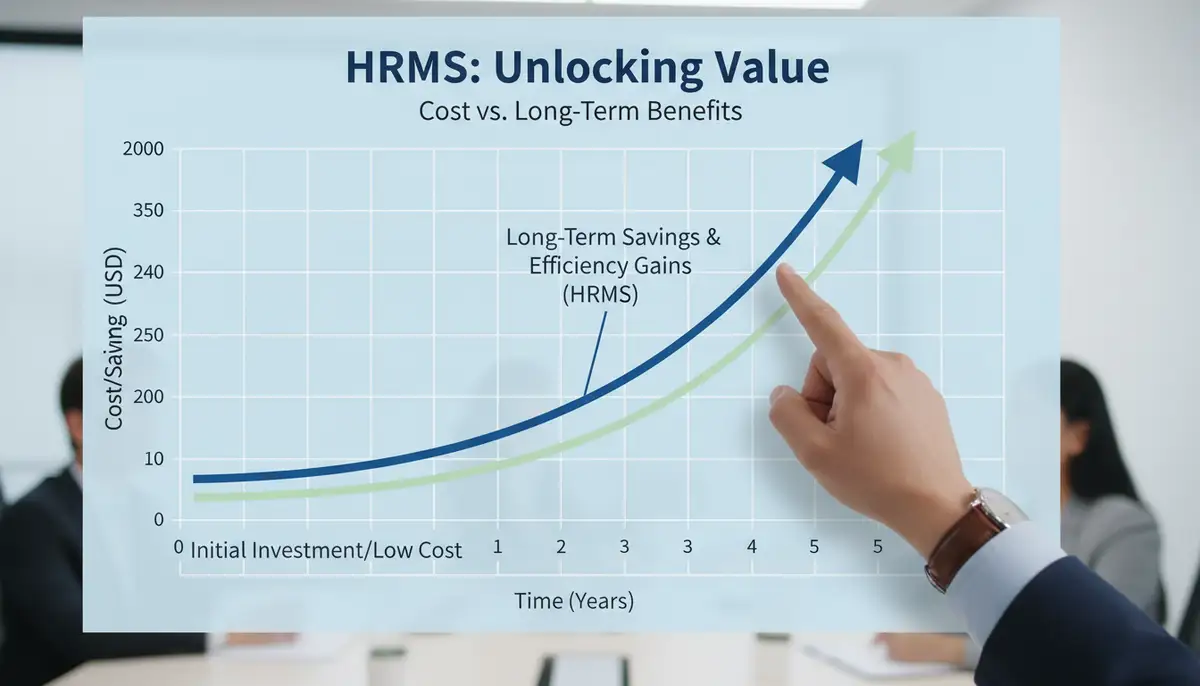
The open-source model allows for extensive customization. This means the system can adapt perfectly to your unique workflows. This is a significant advantage over rigid, off-the-shelf solutions. Companies like Odiware specialize in tailoring Odoo to fit specific business needs, ensuring maximum efficiency and ROI. Many reputable sources, such as Forbes Advisor, highlight the importance of finding HR software that aligns with your budget and needs, and Odoo’s flexibility often makes it a strong contender.
The True Cost of Ownership: Why Odoo Can Be More Affordable
The ‘true cost of ownership’ extends beyond the initial purchase price. It includes implementation, training, maintenance, and potential future upgrades. While the cheapest HRMS software might have a low initial fee, these ongoing costs can quickly add up.
With Odoo, you gain control. You avoid vendor lock-in. You have access to a vast community and a network of expert partners like Odiware. This ensures competitive pricing for support and development. This flexibility contributes to a lower total cost of ownership over time.
Consider the efficiency gains. An HRMS that truly automates tasks and provides valuable insights saves countless hours. It reduces errors. These operational savings far outweigh a slightly higher initial investment. This makes Odoo a truly cost-effective choice, even if not the ‘cheapest HRMS software’ on paper.
Best Practices for Selecting Your HRMS Solution
Choosing the right HRMS requires careful consideration. Don’t just pick the cheapest HRMS software you find. Follow these best practices to make an informed decision.
- Assess Your Current and Future Needs: Document all your HR processes. Identify pain points. Project your business growth over the next 3-5 years. This helps you choose a scalable solution.
- Prioritize Essential Features: Determine which HR functions are absolutely critical. Then, identify ‘nice-to-have’ features. Focus on solutions that cover your core needs first.
- Evaluate Integration Capabilities: Ensure the HRMS can integrate with your existing ERP, CRM, or accounting software. Seamless data flow is vital for efficiency.
- Consider User Experience: A complex or difficult-to-use system will face resistance from employees. Look for intuitive interfaces and mobile accessibility.
- Check Vendor Reputation and Support: Research vendor reviews. Understand their support model and response times. Reliable support is invaluable.
- Plan for Implementation and Training: Account for the time and resources needed for setup and user training. A smooth rollout is essential for adoption.
- Request Demos and Free Trials: Experience the software firsthand. Test its features with your data. This helps confirm it meets your needs.
Many resources can help you in this journey. For instance, you can explore options for most affordable HR software for small businesses. Additionally, watching videos like
can provide valuable insights into basic, no-cost solutions for very specific, limited needs. However, remember that free tools often lack the comprehensive features and scalability required for growing businesses.
When to Involve an Odoo Consultant
While Odoo offers great flexibility, implementing it effectively requires expertise. This is especially true if you are moving beyond the simplest configurations. Simply choosing the cheapest HRMS software and trying to implement it yourself can lead to frustration and costly mistakes.

You should involve an Odoo consultant when your needs are complex. This includes custom workflows, specific regulatory compliance, or integrating Odoo HR with other Odoo modules or third-party systems. A consultant ensures a tailored solution that maximizes your investment.
At Odiware, we specialize in Odoo ERP implementation and custom software solutions. We help businesses streamline operations and enhance productivity. We analyze your unique requirements. Then, we configure Odoo to fit your exact needs. This prevents the common pitfalls associated with a ‘one-size-fits-all’ approach or trying to force the cheapest HRMS software into a complex environment.
We provide strategic guidance from planning to post-implementation support. This ensures your Odoo HRMS is not just functional but also future-proof. While other companies like cybrosys.com, odooimplementers.com, and ksolves.com also provide Odoo services, Odiware focuses on a partnership approach. We aim to understand your business deeply. This ensures your HR solution truly drives value.
Navigating the Market: More Than Just the Cheapest HRMS Software
The HRMS market is vast. It offers solutions ranging from basic tools to enterprise-level systems. Your goal should be to find the right solution, not just the cheapest HRMS software. This means balancing cost with features, scalability, and support.
Consider the long-term impact on your business. An effective HRMS can boost employee engagement. It reduces administrative burden. It also provides critical data for strategic decision-making. These benefits contribute significantly to your bottom line. They are often overlooked when only focusing on upfront costs.
Remember, what is ‘cheapest’ today might be the most expensive tomorrow. This happens if it fails to meet your evolving business needs. For further guidance on selecting the best HR platforms, resources like Forbes Advisor’s best human resource management systems can offer valuable comparisons and insights into various options available in the market.
Frequently Asked Questions About HRMS Software
- Q: What is the primary difference between HRIS, HRMS, and HCM? A: HRIS (Human Resources Information System) manages basic HR data. HRMS (Human Resources Management System) includes HRIS functions plus payroll and time management. HCM (Human Capital Management) adds talent management functions like performance and learning.
- Q: Can the cheapest HRMS software handle complex payroll for international employees? A: Generally, no. Cheapest HRMS software often has limited payroll capabilities, especially for multi-country tax and compliance. Complex needs usually require more robust, specialized solutions.
- Q: Is open-source HRMS software truly free? A: The software itself is often free to download and use. However, you will incur costs for implementation, customization, hosting, training, and ongoing support. These services are essential for a functional system.
- Q: How long does it take to implement an HRMS? A: Implementation time varies greatly. Simple, off-the-shelf solutions might take weeks. Complex, customized systems like Odoo can take several months. It depends on scope, data migration, and integrations.
- Q: What are the biggest risks of choosing the cheapest HRMS software? A: Risks include limited features, poor scalability, inadequate security, lack of integration, and insufficient customer support. These can lead to higher long-term costs and operational inefficiencies.
Your Partner in HRMS Implementation
Choosing the right HRMS is a strategic investment in your company’s future. It’s about more than just finding the cheapest HRMS software. It’s about finding a solution that supports your growth, enhances efficiency, and empowers your employees.

At Odiware, we believe in building long-term partnerships. We guide you through the complexities of HRMS selection and implementation. Our Odoo expertise ensures you get a system that truly aligns with your business goals. We help you unlock Odoo’s full potential.
Don’t let the allure of the cheapest HRMS software overshadow the need for a robust, scalable, and secure solution. Explore how Odoo can transform your HR operations. Consider a consultation with our experts to discuss your specific needs. You can also ‘Try Free Trial’ to experience Odoo firsthand.


