


On-Premise Software vs SaaS: A Critical Business Decision for 2025
In today’s fast-evolving business landscape, selecting the right software deployment model is more critical than ever. The choice between on-premise software vs SaaS can profoundly impact your operational efficiency, budget, and long-term strategic agility. As an Odoo consultant, I frequently guide businesses through this complex decision. Understanding the fundamental differences is the first step toward making an informed choice for your enterprise resource planning (ERP) system or any other critical business application.
Many companies are still evaluating their options. They need to understand the implications of each model. This article will break down the core aspects of on-premise software vs SaaS. We will explore costs, control, scalability, and security. Our goal is to equip you with the knowledge to navigate this decision effectively in 2025.
Understanding On-Premise Software
On-premise software is the traditional model. You install and run the software on servers located within your company’s physical premises. Your IT team manages everything. This includes hardware, software, security, data storage, and backups. You own the software license outright. This gives you a high degree of control over your system.
Historically, this was the only way to deploy complex business applications. It offered a sense of security and direct control. However, it also came with significant responsibilities. Your internal resources handle all aspects of maintenance and upgrades. This model demands a robust internal IT infrastructure and skilled personnel.
Key Characteristics of On-Premise Software:
- Full Control: You have complete command over your data, security protocols, and system customizations.
- Upfront Investment: Requires significant capital expenditure for hardware, software licenses, and implementation.
- Internal Management: Your IT team is responsible for maintenance, updates, security, and troubleshooting.
- Data Residency: All data resides within your physical control, which can be crucial for regulatory compliance.
- Customization: Offers extensive customization possibilities, tailored precisely to unique business processes.
Understanding Software as a Service (SaaS)
Software as a Service (SaaS) is a cloud-based model. A third-party provider hosts the application and makes it available to customers over the internet. You access the software via a web browser. You pay a subscription fee, usually monthly or annually. This model eliminates the need for you to manage any infrastructure. The provider handles all maintenance, security, and updates.
SaaS has become increasingly popular due to its flexibility and lower entry barriers. Companies like Odiware often recommend SaaS solutions for their agility. It allows businesses to focus on their core competencies. They do not need to worry about IT infrastructure management. The biggest difference between SaaS and on-premise solutions is that SaaS solutions are hosted and maintained by a third-party provider, while on-premise solutions are managed internally, as detailed in this comparison of SaaS and on-premise.
Key Characteristics of SaaS:
- Subscription-Based: Pay-as-you-go model, converting capital expenditure into operational expenditure.
- Cloud-Hosted: Access software from anywhere with an internet connection; no local installation required.
- Provider Managed: The vendor handles all infrastructure, maintenance, updates, and security.
- Scalability: Easily scale resources up or down based on demand without significant hardware changes.
- Faster Deployment: Quick to implement and get started, reducing time-to-value.
On-Premise Software vs SaaS: A Detailed Comparison
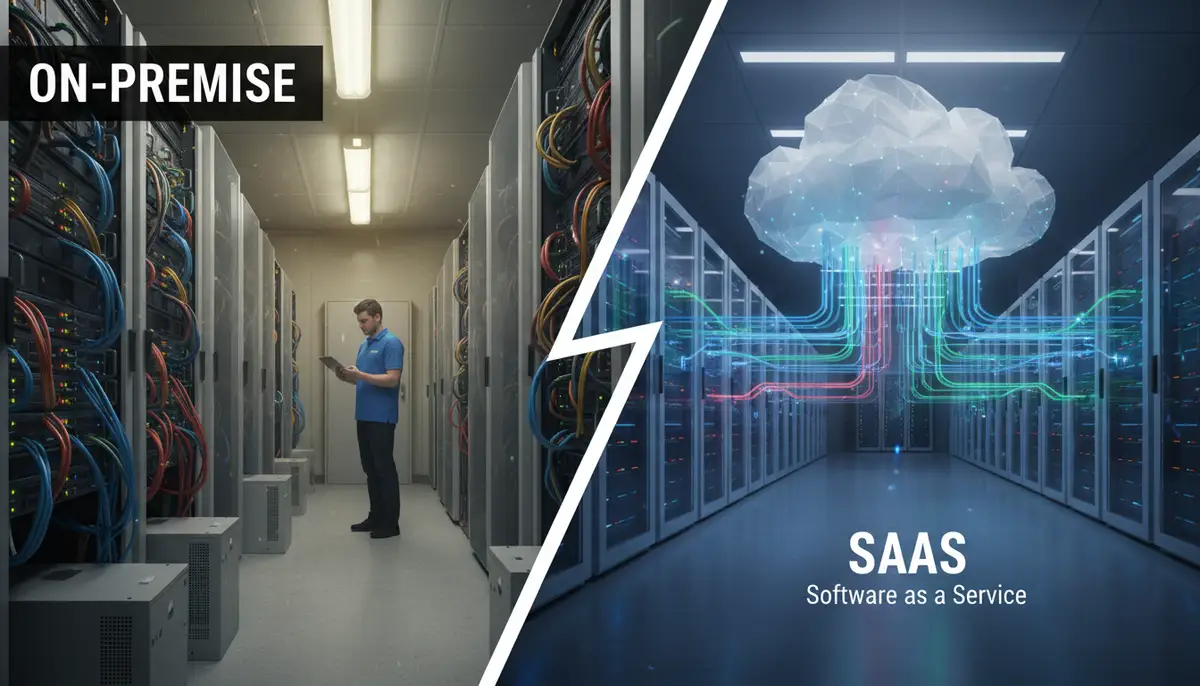
Now, let’s dive deeper into specific aspects where on-premise software vs SaaS diverge. This comparison will highlight the practical implications for your business. We will look at factors like cost, control, scalability, and security. Each factor plays a vital role in your final decision.
1. Cost Implications: On-Premise Software vs SaaS
The cost structure is perhaps the most obvious difference when comparing on-premise software vs SaaS. On-premise solutions demand a significant upfront investment. This includes purchasing licenses, servers, networking equipment, and data center space. You also bear ongoing costs for power, cooling, and hardware depreciation. Additionally, your internal IT team’s salaries for maintenance and support add to the total cost of ownership.
SaaS, conversely, operates on a subscription model. You pay a predictable monthly or annual fee. This fee covers the software, infrastructure, maintenance, and support. This shifts costs from capital expenditure (CapEx) to operational expenditure (OpEx). For many businesses, particularly SMEs, this financial flexibility is a major draw. One of the most consistently attractive advantages of transitioning to SaaS is the potential for substantial cost savings, as explored in this analysis of SaaS benefits and risks.
2. Control and Customization
Control is a significant differentiator in the on-premise software vs SaaS debate. With on-premise, you have absolute control. You can customize the software to fit highly specific business processes. This level of customization can be crucial for unique industry requirements. You also maintain direct control over your data security and compliance measures.
SaaS offers less direct control. Customizations are usually limited to configuration options provided by the vendor. This standardization ensures easier updates and maintenance. However, it might mean adapting some internal processes to fit the software. For many businesses, the trade-off for reduced IT burden is worthwhile. However, if your business has highly specialized needs, on-premise might offer more flexibility.
3. Scalability and Performance
Scalability is another key area when evaluating on-premise software vs SaaS. Scaling an on-premise system requires purchasing and installing more hardware. This can be time-consuming and expensive. It also involves forecasting future needs accurately. Over-provisioning leads to wasted resources, while under-provisioning impacts performance.
SaaS solutions are inherently scalable. The provider manages the underlying infrastructure. They can allocate more resources as your business grows. This elasticity means you only pay for what you use. It allows for rapid adjustments to changing business demands. This agility is a major benefit for dynamic businesses in 2025.
4. Security and Compliance
Security is paramount for any business software. With on-premise solutions, your team is solely responsible for security. This includes physical security, network security, data encryption, and disaster recovery. It offers complete control but requires significant expertise and ongoing vigilance. Many organizations prefer this direct control, especially for highly sensitive data or strict regulatory environments.
SaaS providers invest heavily in security. They typically employ dedicated security teams and advanced measures. These include robust data encryption, regular audits, and compliance certifications. While you relinquish direct control, you often benefit from a higher level of security than many individual businesses can afford. However, understanding the provider’s security policies and data residency is crucial. This is particularly true for industries with specific regulatory requirements.
5. Maintenance and Upgrades

Maintenance and upgrades differ significantly between on-premise software vs SaaS. On-premise systems require your IT staff to handle all updates, patches, and routine maintenance. This can be resource-intensive and may cause downtime. Planning and executing upgrades often involves careful coordination and testing.
With SaaS, the provider manages all maintenance and upgrades. Updates are often rolled out seamlessly. This ensures you always have access to the latest features and security patches. This reduces the burden on your internal IT team. It allows them to focus on more strategic initiatives. On-premises solutions require complex implementation and infrastructure management, while software as a service (SaaS) doesn’t, as further explained in this comparison by AWS.
| Feature | On-Premise Software | SaaS (Software as a Service) |
|---|---|---|
| Deployment | Installed locally on company servers | Hosted by vendor, accessed via internet |
| Cost Model | High upfront CapEx, ongoing OpEx | Subscription-based OpEx |
| Control | Full control over data, security, customization | Limited customization, vendor controls infrastructure |
| Maintenance | Managed by internal IT team | Managed by vendor |
| Scalability | Requires hardware upgrades, slower | Easily scalable by vendor, faster |
| Accessibility | Limited to internal network or VPN | Anywhere with internet access |
| Updates | Manual, often disruptive | Automatic, seamless |
When to Choose On-Premise Software
Despite the rise of SaaS, on-premise software still holds significant advantages for certain businesses. You might consider on-premise if your organization has extremely specific regulatory compliance needs. These could require data to reside within your physical control. Industries like finance, government, or healthcare often face such mandates. Furthermore, if you require extensive, highly specialized customizations that standard SaaS offerings cannot accommodate, on-premise provides that flexibility. It allows deep integration with legacy systems. This is often a challenge for cloud-based solutions.
Additionally, if you have a robust, experienced internal IT team and prefer complete ownership of your infrastructure, on-premise can be a viable choice. Businesses with stable, predictable growth patterns might also find the long-term cost of ownership favorable after the initial investment. The key is a clear understanding of your unique operational requirements and IT capabilities. For a deeper dive into related deployment options, consider exploring a comprehensive guide to cloud ERP vs on-premise ERP.
When to Choose SaaS
SaaS is often the preferred choice for modern businesses seeking agility and reduced IT overhead. If your business values rapid deployment and ease of use, SaaS is likely a better fit. It’s ideal for companies with limited IT resources or those looking to reallocate IT staff to strategic projects. Small to medium-sized businesses (SMBs) often benefit most from the lower upfront costs and predictable subscription model. This helps manage budgets more effectively.
Companies experiencing rapid growth or fluctuating demand will find SaaS’s scalability invaluable. It allows them to quickly adapt without major infrastructure investments. SaaS also promotes remote work and collaboration, which is essential in today’s global economy. Many modern ERPs, like Odoo, offer robust SaaS deployments. This provides significant benefits of Odoo for modern enterprises. For most businesses in 2025, SaaS offers a compelling blend of flexibility, cost-effectiveness, and accessibility.
Common Mistakes in Choosing On-Premise Software vs SaaS
Making the wrong choice between on-premise software vs SaaS can lead to significant challenges. One common mistake is underestimating the total cost of ownership for on-premise. Many businesses focus only on license fees. They overlook ongoing costs for hardware, maintenance, power, and specialized IT staff. This can quickly inflate budgets.
Another error is over-customizing a SaaS solution. While some configuration is possible, trying to force a SaaS product into a highly unique mold can break its upgrade path. This negates many of its benefits. Conversely, choosing on-premise without the necessary internal IT expertise can lead to security vulnerabilities and performance issues. Businesses often fail to properly assess their internal capabilities. They might also neglect future growth projections. This leads to a system that cannot scale. Companies like Cybrosys, SerpentCS, and Ksolves also advise careful consideration here.
When to Involve an Odoo Consultant (like Odiware)
The decision between on-premise software vs SaaS is rarely straightforward. It requires a deep understanding of your business processes, IT infrastructure, budget constraints, and long-term strategic goals. This is where an experienced Odoo consultant becomes invaluable. At Odiware, we specialize in helping businesses navigate these complex choices. We provide tailored advice based on real-world Odoo implementation experience.
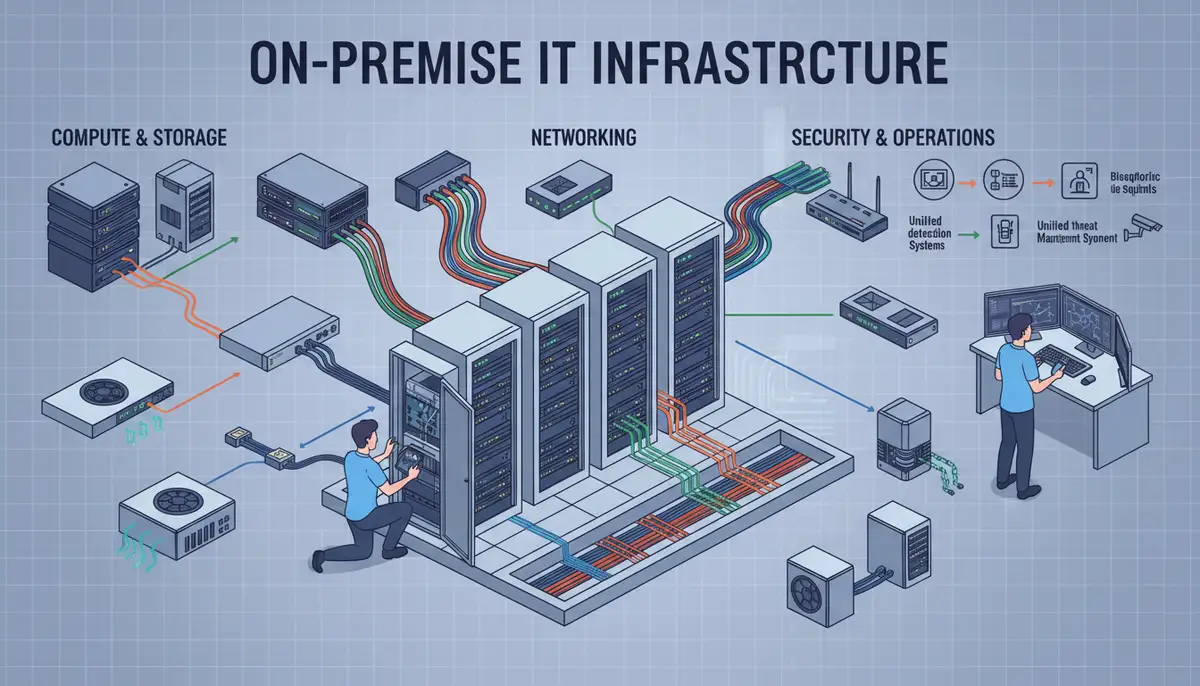
An Odoo consultant can conduct a thorough needs assessment. We analyze your current systems, identify pain points, and map out future requirements. We help you evaluate the true total cost of ownership for both on-premise and SaaS models. This includes hidden costs and long-term implications. We also ensure that your chosen solution aligns with your industry’s best practices and regulatory demands. Our expertise ensures you avoid common pitfalls and make a decision that truly supports your business growth. We help you understand the nuances of on-premise software vs SaaS in the context of Odoo.
Frequently Asked Questions About On-Premise Software vs SaaS
Q1: Is on-premise software more secure than SaaS?
Not necessarily. While you have full control with on-premise, your security is only as strong as your internal team and infrastructure. SaaS providers often have dedicated security experts and advanced safeguards. They usually invest more in security than individual companies. The key is to thoroughly vet your SaaS provider’s security protocols and certifications.
Q2: Can I migrate from on-premise to SaaS later?
Yes, migration is possible, but it can be complex. It involves data transfer, re-configuration, and potential process adjustments. Planning is crucial. An Odoo consultant can help streamline this transition. They ensure minimal disruption to your operations. This is a common path for businesses evolving their IT strategy.
Q3: What about hybrid models for on-premise software vs SaaS?
Hybrid models combine elements of both. You might keep sensitive data or core applications on-premise. Other applications or less critical data can move to the cloud (SaaS). This offers flexibility. It allows businesses to leverage the benefits of both worlds. However, managing a hybrid environment adds complexity. It requires careful integration planning.
Q4: How does the choice impact my IT team?
On-premise demands a large, skilled IT team for infrastructure management. SaaS shifts this burden to the vendor. Your IT team can then focus on strategic initiatives and user support. This frees them from routine maintenance tasks. It allows for more innovative projects. The choice of on-premise software vs SaaS directly affects IT resource allocation.
Q5: Is Odoo available as both on-premise and SaaS?
Yes, Odoo is highly flexible. It can be deployed as a cloud-based SaaS solution (Odoo Online) or installed on your own servers (Odoo Enterprise On-Premise or Odoo Community). This flexibility is one of Odoo’s strengths. It allows businesses to choose the model that best fits their specific needs. Odiware helps clients implement Odoo in either environment.
Conclusion: Making the Right Choice for Your Future
The debate of on-premise software vs SaaS is not about one being inherently superior. It’s about finding the best fit for your unique business context in 2025. Both models offer distinct advantages and disadvantages. Your decision should align with your strategic objectives, budget, IT capabilities, and regulatory requirements. Do you need maximum control and deep customization? On-premise might be your path. Do you prioritize agility, scalability, and reduced IT burden? SaaS is likely the answer.
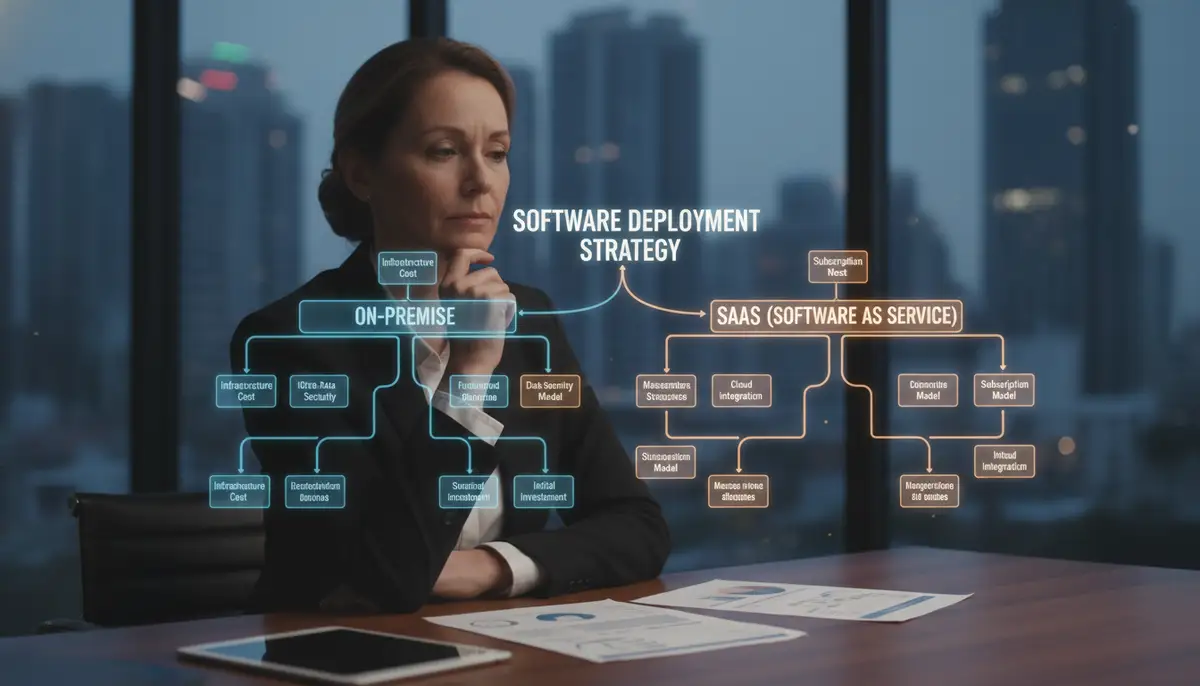
Navigating this choice can be daunting. It involves careful analysis and foresight. As expert Odoo consultants, Odiware is here to partner with you. We help you assess your needs. We guide you through the complexities of on-premise software vs SaaS. Our goal is to ensure your software deployment empowers your business for sustainable growth. Don’t leave this critical decision to chance. Partner with experts who understand the nuances of Odoo and modern IT strategies. Make an informed choice that propels your business forward. Consider a Start Free Trial to explore Odoo’s capabilities firsthand.


